



Heart Health Yoga: A Safe, Beginner-Friendly Routine to Strengthen Your Heart
In just a few minutes, you’ll learn one overlooked breathing cue that makes every pose safer and more heart-supportive. Healthy movement doesn’t need to be intense to support your heart. For many beginners or those returning to exercise, yoga offers a gentle way to improve circulation, reduce stress, and build confidence. This guide walks you through a complete heart health yoga routine, with safe pacing, modifications, and real-world tips to help you begin with ease. If you want digital guidance on gentle practice styles, explore the best yoga apps for all levels. These tools provide slow-paced, beginner-friendly programs ideal for heart-focused routines. By the end, you’ll know exactly how to warm up, move safely, breathe with ease, and finish in a way that lets your heart return to calm.
Why Yoga Is Essential for Heart Health

A small shift in how you breathe today can support your heart more than you might expect.
Yoga is more than gentle movement, it is a system that regulates breath, nervous system balance, and circulation, all of which directly impact cardiovascular health. For beginners or anyone needing a safe, low-impact approach, heart health yoga offers significant benefits without overwhelming intensity.
Reduces Stress and Lowers Cardiovascular Load
Chronic stress activates the sympathetic nervous system, raising heart rate and blood pressure. Yoga’s slow breathing and mindful movement activate the parasympathetic response, helping your heart relax and recover.
Improves Circulation and Oxygen Flow
Gentle flows like Cat–Cow, Half Sun Salutation, and Bridge Pose enhance blood flow without sudden spikes in exertion. This helps deliver oxygen efficiently while reducing strain on the heart.
Enhances Mobility and Reduces Physical Tension
Increased flexibility decreases unnecessary muscular tension. When your body moves more fluidly, everyday actions require less effort—reducing the likelihood of overexertion that can stress the heart.
Supports Weight Management & Healthy Habits
Yoga promotes body awareness, calmer eating patterns, and better sleep. These lifestyle factors play a major role in maintaining long-term heart health.
Accessible for All Ages and Fitness Levels
Whether you’re new to exercise, older, sedentary, or rebuilding your fitness foundation, heart-focused yoga can be adapted with chairs, walls, or shorter ranges of motion.
Safety, Warm-Up & Heart-Friendly Requirements
Read this first, one quick check determines if today is the right day to practice.
A heart-healthy yoga routine begins with understanding your body’s current state. These precautions don’t limit your progress, they ensure it.
Who Should Modify or Pause This Routine
If you’ve recently experienced chest pain, dizziness, shortness of breath at rest, or have unstable blood pressure, speak with a clinician before starting.
Warm-Up Essentials for Circulation
Spend 3–5 minutes mobilizing your body: slow marching in place, shoulder rolls, gentle ankle circles, or easy hip movements. Follow with 4–6 slow breaths (inhale 4 seconds, exhale 6 seconds).
Using Apps for Guided Pacing (Optional)
Apps like Down Dog, Yoga-Go, and Grokker help keep pacing slow and safe. Choose “beginner,” “slow,” “restorative,” or “low-impact” settings.
Heart Health Yoga Step-by-Step Routine for Beginners
Diaphragmatic Breathing & Heart-Centered Grounding

Master this step and every other pose becomes safer and easier. Start seated on a chair or supported floor position. Place one hand on your belly and one on your chest. Inhale through your nose for 4 seconds, letting your belly expand before your chest. Exhale for 6 seconds, softening shoulders.
What it does:
- Reduces tension on the heart
- Activates parasympathetic calm
- Sets your ideal pace for all movement
Modifications:
- Lying down with knees bent
- Shorter breathing cycles (3 in, 4 out)
Pitfalls to avoid:
- Lifting the chest too much
- Forcing deep breaths → dizziness
- Tightening the jaw
Pro Tip: Extend exhales slightly longer—they naturally slow your heart rate.
Cat–Cow Flow for Safe Circulation
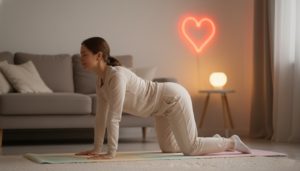
This gentle spinal flow boosts blood flow in under a minute.Begin on hands and knees. On an inhale, drop your belly, lift your chest (Cow). On an exhale, round your spine (Cat). Move slowly for 8–10 cycles.
Benefits:
- Warms the spine
- Encourages circulation
- Keeps heart effort very gentle
Modifications:
- Chair version if wrists/knees are sensitive
- Forearms elevated on blocks
Pitfalls:
- Moving too quickly
- Overarching neck
- Dropping into shoulders
Pro Tip: Let breath lead movement—not momentum.
Mountain → Half Sun Salutation

This is where your heart wakes up—slowly and safely. Start in Mountain Pose. Inhale, arms rise. Exhale, fold forward with soft knees. Inhale to Half Lift (hands on shins/thighs). Exhale fold. Inhale to stand and sweep arms up. Exhale to Mountain.
Repeat 4–6 rounds at a gentle pace.
Modifications:
- Hands on chair for fold
- Feet hip-width for balance
Pitfalls:
- Locking knees
- Standing too fast → dizziness
- Shoulder tension
Pro Tip: Exhale fully during the fold to keep heart load low.
Supported Warrior I

A tiny stance adjustment transforms this pose from stressful to heart-safe. Step right foot forward, left foot back. Keep feet hip-width apart. Lift arms gently on inhale, lower slightly on exhale.
Benefits:
- Strengthens legs (supports circulation)
- Open chest
- Improves balance
Modifications:
- Hands on chair or wall
- Shorten stance
- Reduce knee bend
Pitfalls:
- Overarching lower back
- Narrow stance → instability
- Raising arms too forcefully
Pro Tip: Keep the back heel grounded lightly—not forced.
Bridge Pose (Gentle Heart Opener)
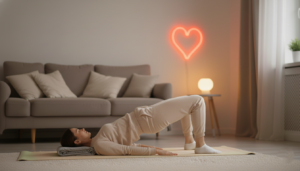
Most people lift too high—your safest version is often the smallest. Lie on your back. Feet hip-width. Press feet down and lift hips gently, only as high as comfortable. Hold 3–5 slow breaths.
Benefits:
- Open chest
- Stimulates circulation
- Releases sitting tension
Modifications:
- Blanket under shoulders
- Half-lift (low bridge)
Pitfalls:
- Overarching back
- Lifting too fast
- Breath-holding
Pro Tip: Imagine knees sliding forward to lengthen thighs.
Supported Resting Pose (Cool Down & Heart Reset)

Don’t skip this—it’s where your heart returns to calm. Lie on your back with lower legs on a chair or place a pillow under your knees. Close eyes, breathe naturally for 1–3 minutes.
Benefits:
- Resets heart rate
- Calms nervous system
- Reduces post-exercise strain
Modifications:
- Recline against wall or sofa
- Use blanket for warmth
Pitfalls:
- Forcing deep breaths
- Scrolling on phone
- Skipping cooldown
Pro Tip: Let the exhale lengthen on its own.
Common Pitfalls & How to Fix Them
If your heart rate jumps unexpectedly, this section saves your practice.
- Moving faster than your breath → Slow down until you can breathe comfortably.
- Pushing flexibility → Use props and shorten ranges.
- Holding breath → Focus on long, soft exhales.
- Ignoring early discomfort → Stop and sit; resume only if symptoms resolve.
- Skipping warm-up/cooldown → Always include both.
Safety & Privacy Checklist
Twenty seconds now protects your heart and your data.
Physical Safety
- Move at a pace where speech is comfortable.
- Stop for chest discomfort, radiating pain, nausea, or dizziness.
- Avoid head-below-heart positions if prone to BP drops.
- Use stable surfaces and non-slip mats.
App Privacy & Data Safety
- Review permissions before starting.
- Turn off location access unless required.
- Limit motion/heart-tracking if not needed.
- Avoid sharing medical info in app communities.
To build even healthier habits, see 10 heart health tips.
When Should You Consult a Heart Specialist?

If one small signal feels ‘off,’ getting expert guidance can protect your long-term heart health.
Even though gentle yoga is generally safe, certain symptoms require medical attention, especially when practicing a heart-supportive routine. These warning signs are not to be ignored, and consulting a cardiologist or qualified healthcare provider can help ensure you’re training safely.
Persistent Chest Discomfort or Tightness
Any pressure, heaviness, or squeezing sensation even mild—should be evaluated. This is especially important if it appears during or shortly after activity.
Unexplained Shortness of Breath
If light breathing exercises feel unusually difficult, or if you become breathless during very gentle movements, seek medical guidance.
Irregular or Rapid Heartbeat Episodes
Palpitations, fluttering sensations, or sudden spikes in heart rate can indicate underlying conditions that need assessment.
Dizziness, Faintness, or Lightheaded Spells
These symptoms may signal blood pressure instability or circulation issues and should be checked by a professional.
Swelling in Legs, Ankles, or Feet
Fluid retention is a sign your heart may be working harder than usual.
Existing Heart Conditions With New Symptoms
If you already have hypertension, arrhythmia, or a history of cardiovascular concerns, any new or worsening symptom warrants immediate consultation.
Family History of Early Heart Disease
If heart disease runs in your family, getting advice early even without symptoms can help tailor a safer, more personalized fitness plan.
Conclusion: Building a Sustainable Heart-Healthy Yoga Habit
Heart health isn’t built in a day, it’s strengthened through consistent, compassionate movement. This heart health yoga routine gives you a safe, accessible way to support your cardiovascular system without overwhelming your body. With gentle breathwork, slow flow sequences, and beginner-friendly modifications, you now have a complete toolkit to improve circulation, ease stress, and cultivate a calmer nervous system.
Remember, the goal is not intensity, it’s consistency and mindful pacing. Even 10 minutes of controlled breathing and light movement can make a measurable difference in how your body handles stress and daily tasks. If you pair this routine with nourishing habits like a heart-healthy diet, better sleep, and steady walking, you can build a lifestyle that supports long-term wellness from the inside out.
Your heart thrives on consistency, calm, and care. Start small, practice daily if possible, and let this routine become a foundation for a healthier, more balanced life.
FAQs
Can yoga improve heart health?
Yes. Through stress relief, better circulation, and mindful breathing. It complements, not replaces, medical care.
How often should I practice?
Aim for 3–5 times weekly, 10–25 minutes each.
Is this safe for hypertension?
Usually, yes if you avoid long inversions. Get medical clearance first.
Should I track heart rate?
Optional. Comfort and breath quality matter more.
Do I need experience?
No—this routine is built for beginners with modifications.
Can I use yoga apps?
Yes—Down Dog, Yoga-Go, and Grokker help with pacing. Review data permissions first.

User Reviews