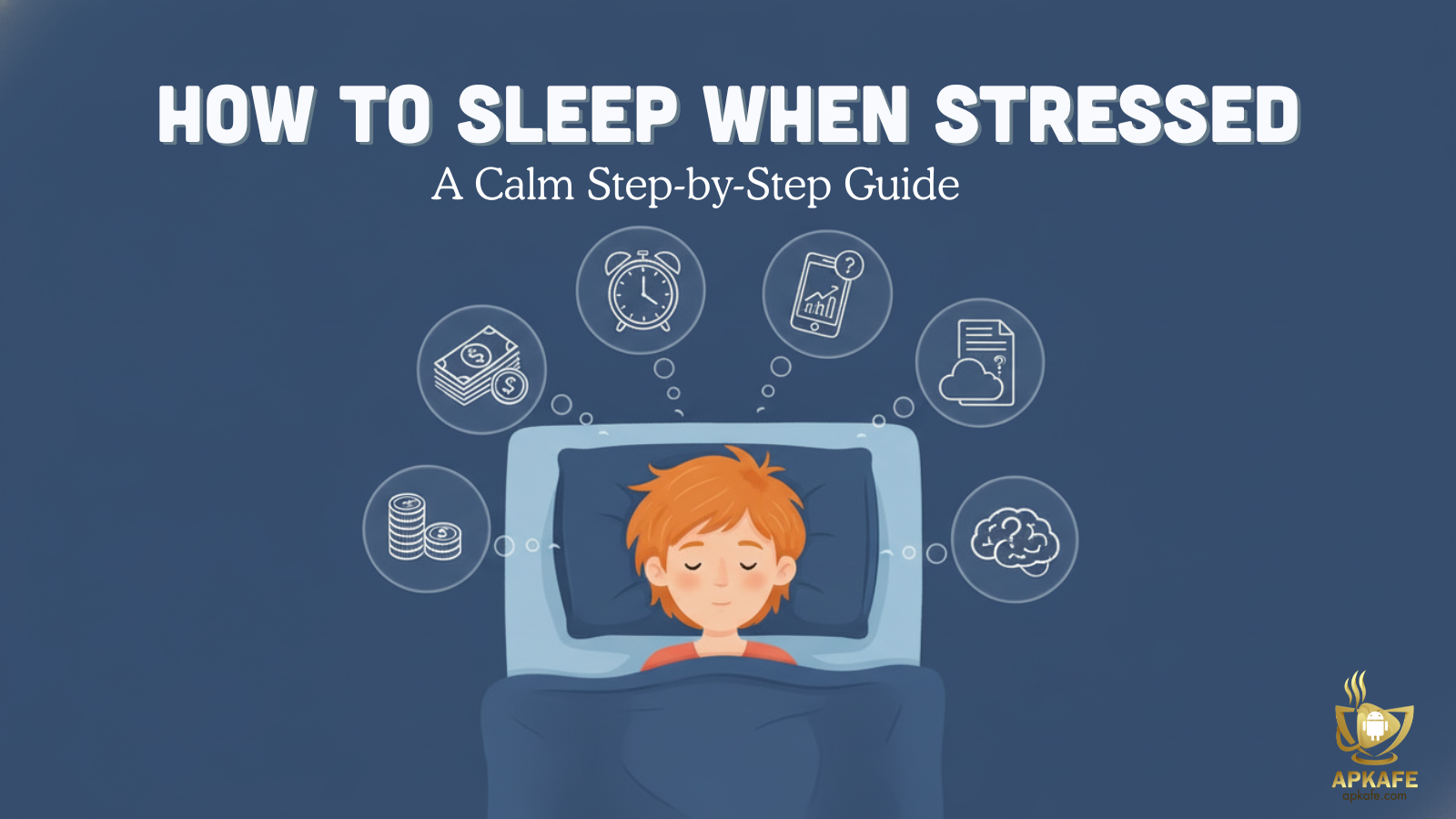




How to Sleep When Stressed — A Calm, Step-by-Step Guide
Stress makes falling asleep difficult because it activates the body’s arousal systems: faster heart rate, shallow breathing, racing thoughts, and physical tension. If this sounds familiar, you’re not alone — many people experience “tired but wired” nights during busy or anxious periods. The good news: you can guide your body back toward rest with a simple, safe, repeatable routine that reduces stimulation and signals your brain that it’s time to unwind. This guide uses a PAS approach (Problem → Agitation → Solution): first understanding why stress blocks sleep, then walking through a realistic 5-step plan you can use tonight. By the end, you’ll know how to create a low-friction sleep environment, calm your body, quiet your mind, and gently transition into sleep using both traditional techniques and privacy-conscious wellness apps.
Why It’s Hard to Sleep When You’re Stressed
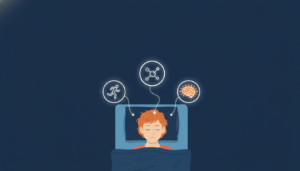
Understanding how stress disrupts your body helps you choose the right techniques to calm it down.
Stress makes sleep difficult for three main reasons:
- It triggers the fight-or-flight response.
Cortisol rises, your heart rate increases, and your brain stays alert — all signals that keep your body from entering sleep mode. - Modern stress activates an ancient survival system.
Deadlines, worries, and constant mental load are not life-threatening, but your brain can’t tell the difference. It reacts as if danger is present, keeping you wired even when you’re exhausted. - It’s physiology, not personal failure.
Stress-related sleeplessness isn’t a lack of discipline; it’s your nervous system doing what it’s built to do. Once you understand this, relaxation techniques and the 5-step routine become easier to apply.
Build the Conditions for Stress-Lowered Sleep
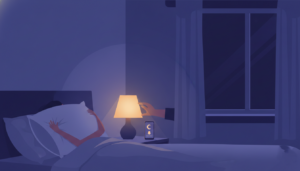
A calm wind-down works best when your environment and tools support relaxation instead of stimulating you.
Create a low-friction environment (lighting, temperature, devices)
Your sleep environment doesn’t need to be perfect — just predictable and low-stimulation. Dimming the lights at least 60 minutes before sleep signals your internal clock to increase melatonin production. Lowering room temperature slightly (around 60–67°F, per sleep research from NIH) helps the body cool down, which naturally induces sleepiness. Put devices on “Do Not Disturb” and reduce background noise where possible.
Small adjustments go a long way. Instead of trying to overhaul your entire bedroom, start with one or two cues: turning on a lamp rather than overhead lighting, or setting your phone to silent and placing it across the room.
Prepare your tools (apps, trackers, permissions)
Apps like Sleep Cycle, Calm, and BetterSleep offer guided breathing, soundscapes, and sleep analytics that can support relaxation. Before using them, review permissions carefully:
- Enable only sleep and audio features you need.
- Disable unnecessary location or contacts access.
- Use on-device storage when available.
- Check the app’s data deletion and export policies.
This is especially important because sleep patterns are considered sensitive health information. If your device supports it, enable two-factor authentication and avoid syncing data over public Wi-Fi.
Step-by-Step Routine to Sleep When Stressed
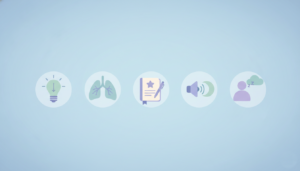
This routine reduces physical and mental arousal step by step, helping your body glide toward sleep naturally.
Downshift stimulation (light, screens, tasks)
Reducing stimulation in the hour before bed is non-negotiable during stressful periods. Blue and bright light reduces melatonin and tells your brain to stay alert. Try switching to warm bedside light and avoid doom-scrolling or intense conversations late at night.
A simple boundary: create a “digital sunset.” Choose a time when screens shut down, even if it’s just 20–30 minutes before bed. If you must use your phone, enable night mode, reduce brightness, and avoid emotionally activating content.
Calm the body (breathing, muscle relaxation, gentle mobility)
Stress often shows up physically: tight shoulders, shallow breathing, or a sense of pressure in the chest. Slow breathing activates the parasympathetic nervous system — responsible for calm and restoration.
Try this sequence:
- 30–60 seconds of slow nasal breathing (inhale 4, exhale 6).
- Gentle neck and shoulder rolls.
- Progressive muscle relaxation: tense → hold → release.
Apps like Calm offer guided breathwork you can follow hands-free. These micro-movements release muscle tension that may have built up throughout the day.
Calm the mind (worry dump, guided audio, cognitive cues)
Mental tension can be stronger than physical tension. A “worry dump” — writing down everything on your mind — can externalize racing thoughts and help your brain disengage. Evidence from cognitive behavioral sleep strategies (CBT-I) suggests that structured worry time reduces nighttime rumination.
Supportive options:
- 1-minute journal list
- Guided meditation in BetterSleep
- Soft spoken sleep stories
- “Observe the thought, let it pass” cognitive cue
Avoid perfection; the goal is to offload, not solve, stress.
Use supportive sleep apps (Sleep Cycle, Calm, BetterSleep) mindfully
Apps are best used as supports, not cures. Here’s how to integrate them safely:
- Sleep Cycle: track sleep trends; use its “wind-down” reminders.
- Calm: guided breathing and timed relaxation sessions.
- BetterSleep: ambient sound mixes + anxiety-friendly meditations.
If tracking stresses you out, disable analytics and use audio-only features. If a sound keeps you awake, switch to a softer, lower-frequency track. You can also combine app support with Sleep tracker apps for general habit insights, not diagnoses.
Transition into sleep (timers, consistent cues, lights-out ritual)
Consistency is one of the strongest signals for your biological clock. Choose a simple cue — e.g., turning off the lamp, stretching your hands, then lying on your side. Over time, your body learns “this means sleep.”
You can also add a timer-based fade-out sound from BetterSleep or Cal. Keep your breathing slow, and remind yourself that restfulness counts even if sleep doesn’t come immediately.
Pitfalls & Pro Tips
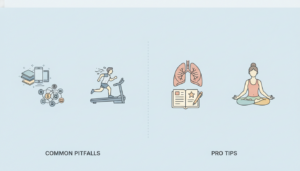
Many stressed sleepers accidentally reinforce wakefulness — here’s how to avoid the most common traps.
Common pitfalls
- Overusing screens as distraction
- Monitoring sleep trackers too closely
- Doing intense exercise right before bed
- Trying too many techniques at once
- Staying in bed frustrated (best practice: reset)
Expert pro tips
- Pair one physical cue + one mental cue (breathing + journaling).
- Use The Best Yoga Apps (https://apkafe.com/the-best-yoga-apps-for-all-levels-in-2024/) for gentle wind-down flows.
- Try earlier stress relief using guides like Reduce stress & anxiety.
- Keep the nighttime routine flexible — consistency > perfection.
- Review app privacy panels weekly.
Contrindications & “Stop If…”
These red flags help you understand when home sleep routines may not be enough.
Stop and consult a healthcare professional if you notice:
- Persistent insomnia for more than a few weeks
- Loud snoring, choking, or gasping at night
- Chest pain, dizziness, fainting, or shortness of breath
- Reactions to stress you cannot control
- Severe anxiety that interferes with daily life
When to Seek Professional Help
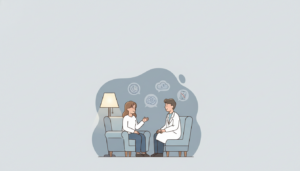
If sleep difficulties persist or heavily impact your life, professional guidance can make things safer and easier.
Consider consulting a healthcare provider if:
- Your sleep problems last longer than three weeks, even after lifestyle adjustments.
- You experience panic spikes, fast heartbeat, or nighttime anxiety episodes.
- Stress and fatigue start affecting your job, relationships, or mood.
- You suspect a sleep disorder such as sleep apnea or restless awakenings.
You rely on sleep medication and want safer long-term solutions. - You’re pregnant, have chronic conditions, or feel unsure about practicing relaxation techniques safely.
Reaching out to a doctor, therapist, or sleep specialist is a form of self-care, not a failure. They can help you identify underlying causes and offer personalized, evidence-based support. Remember: this routine supports your rest, not replaces professional care. If you have doubts, consult a doctor.
FAQs
Quick answers to the most common stressful-night questions.**
What if my mind won’t stop racing?
Try a 60-second worry dump or short guided breathing. Mental offloading weakens the rumination loop. If thoughts stay intense, get out of bed briefly and reset.
How long should a wind-down routine take?
Ideally 20–45 minutes, but even 10 minutes helps. The key is repeating cues at roughly the same time nightly.
Can breathing exercises really help?
Yes — evidence from NIH shows slow, controlled breathing can lower heart rate and promote parasympathetic activation, which reduces stress.
Do sleep apps help or make anxiety worse?
They help many people, but if tracking becomes stressful, switch to audio-only features or disable metrics. Apps should support, not pressure you.
Is it normal to wake up stressed at night?
Yes — stress hormones can spike during lighter sleep stages. Use breathing or a brief reset if needed. Seek medical advice if episodes are frequent or severe.

User Reviews