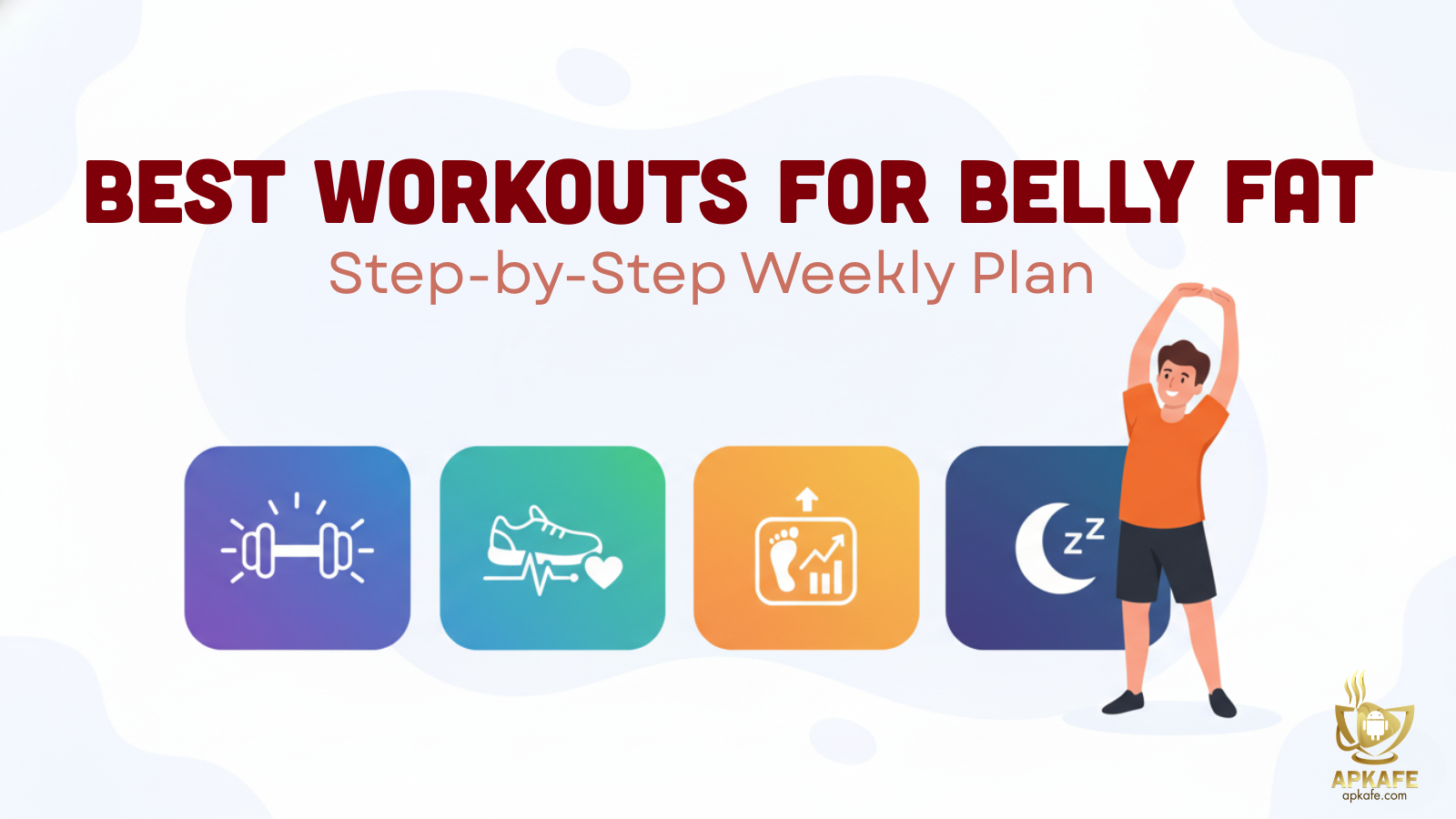




Best Workouts for Belly Fat: A Step-by-Step Plan That Actually Sticks
In the next 10 minutes, you’ll build a simple weekly plan (strength + cardio + steps) and know exactly what to do if progress stalls—without doing extreme workouts or extreme dieting. You’re not looking for random ab moves—you want a routine you can repeat long enough to see your waist trend in a healthier direction. Here’s the key: you can’t choose where fat comes off first, but you can choose workouts that increase total energy burn, build strength, and protect your joints so you stay consistent. This guide gives you a step-by-step system (Zone 2 walking/cardio + full-body strength + optional HIIT + core stability + daily movement), a 4-week schedule with beginner tracks, and quick fixes for the common problems that make people quit around Week 2–3.
What is belly fat?
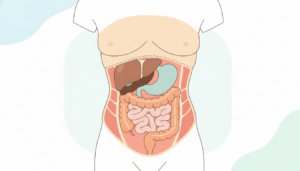
Belly fat is the body fat stored around your midsection. It includes subcutaneous fat (the softer, pinchable layer under the skin) and visceral fat (fat stored deeper inside the abdomen around organs). Both can contribute to a larger waistline, but higher levels of visceral fat are more strongly associated with health risks. The key takeaway for workouts is that belly fat isn’t “special fat” you can target with ab exercises—your waist changes most reliably when you combine full-body strength, regular cardio, daily movement, and good recovery over time.
Why It’s So Hard to Lose Belly Fat

If belly fat feels like the “last place to change,” it’s not just you—there are a few common reasons it can move slower than other areas.
1. Your body doesn’t choose where fat comes off first
Fat loss happens across your whole body, not in one “target” area.
Genetics and hormones influence where you store fat and where you lose it first. So your waist might change later than your face, arms, or legs—even when the plan is working.
2. Stress + poor sleep can make it feel harder (and cravings louder)
When you’re tired, recovery is worse and workouts feel harder. That makes it easier to skip sessions.
Stress and low sleep can also increase cravings and “snack-y” choices. A practical fix is to protect sleep and keep workouts sustainable instead of piling on more intensity.
3. You might work out… but still sit most of the day
A great 30-minute workout can’t fully cancel a day of barely moving.
Daily movement (steps/NEAT) adds up fast. Two short walks per day can sometimes help more than adding another tough workout.
4. Weekend eating + drinks can quietly erase progress
You don’t need to be perfect, but patterns matter.
A couple of higher-calorie days can wipe out a small weekly deficit. Instead of restricting harder, aim to smooth the spikes: include protein at meals, fiber most days, and watch liquid calories.
5. Water retention can hide early changes
When you start strength training, your muscles can hold more water while they recover. That can mask fat loss on the scale.
Digestion and bloating can also make your waist feel “stuck” day-to-day, which is why weekly tracking beats daily panic.
6. Your plan might be too intense to repeat (or too easy to progress)
If it’s too intense, you burn out before results show.
If it’s too easy and never progresses, your body adapts and stalls. The sweet spot is a plan you can repeat, with one small upgrade each week.
Mini takeaway: Belly fat loss is usually a consistency + recovery + daily movement problem—not a “perfect ab exercise” problem. Treat your waist like a 4–8 week trend, not a daily verdict.
What “belly fat workouts” can (and can’t) do
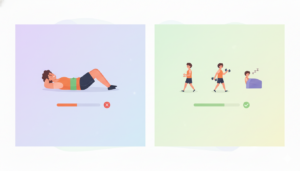
Two rules decide whether your effort shows up in your waistline—learn them now and you’ll stop wasting workouts.
Belly fat basics (subcutaneous vs visceral)
- Subcutaneous fat is the pinchable layer under the skin.
- Visceral fat sits deeper around organs and is linked with higher cardiometabolic risk when elevated.
So what should you do? Focus on habits you can repeat: cardio + strength + daily movement + recovery.
The spot-reduction myth (why crunches alone don’t solve it)
A systematic review/meta-analysis in Human Movement concluded localized muscle training doesn’t meaningfully reduce nearby fat depots (i.e., reliable “spot reduction” isn’t what you should bet on).
Step-by-step: the best exercises to lose belly fat (10-step system)
Steal this structure—you’ll know exactly what to do this week and how to progress next week.
Burpee Presses (Burpee + Overhead Press)
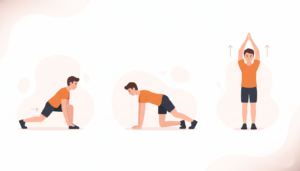
Start standing with light dumbbells (or no weights). Squat down, place hands on the floor, step your feet back into a plank, then step them back in. Stand up and press the weights overhead.
Do 20–30 seconds work, rest 60–90 seconds, repeat 6–8 rounds.
Low-impact: no jumping—always step back/in. Or swap for a Dumbbell Thruster (squat + press).
Kettlebell Swings (or Dumbbell Swings)
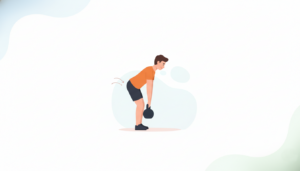
Stand tall, hinge at the hips (push hips back), keep your back neutral. Drive your hips forward to swing the weight up to about chest height—arms guide the weight, hips power it.
Do 3 sets × 12–20 reps (rest 60–90s) or 20s on / 40s off × 8 rounds.
Beginner option: practice a hip hinge/RDL first if you can’t keep your back neutral.
Squat Thrusts (No-jump burpee, no push-up)
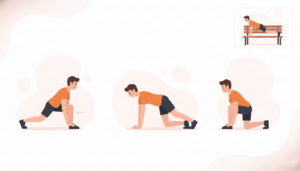
From standing, place hands down, step feet back to a plank. Step feet back in toward your hands, then stand up.
Do 20–30 seconds work, rest 60 seconds, repeat 6–10 rounds.
Low-impact: do it slower to keep form clean. If wrists bother you, do it with hands on a bench (incline).
Incline Intervals (Power Incline Walk)
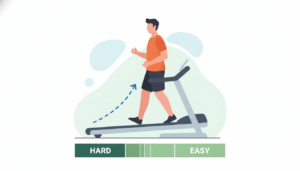
Warm up for 5 minutes easily. Then go 30 seconds hard-but-controlled (higher incline/faster pace), followed by 90 seconds easy.
Repeat 6–8 rounds, then cool down 3–5 minutes.
Beginner option: choose incline walking instead of sprinting. Outdoors, use a short hill and walk down to recover.
Jump Rope
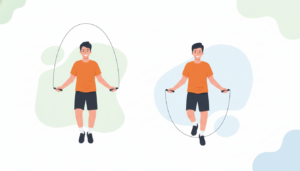
Keep jumps low and light, shoulders relaxed, steady rhythm. The goal is heart rate—not height.
Do 45–60 seconds work, rest 45–60 seconds, repeat 6–10 rounds.
Low-impact: “shadow rope” (no rope) or step jacks (step side-to-side, no jumping) if knees/ankles are sensitive.
Dumbbell Punches (or Shadow Boxing)
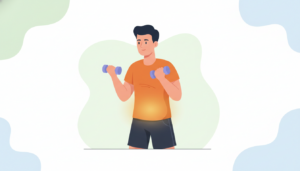
Hold very light dumbbells (or none). Slight bend in knees, brace your core. Punch straight or across your body without shrugging your shoulders or twisting your lower back aggressively.
Do 30 seconds work, rest 30–60 seconds, repeat 8–12 rounds.
Beginner option: start without weights and build speed/control first.
Battle Ropes (If available)
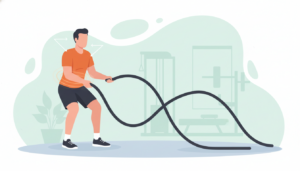
Stand athletic (knees soft), brace your core. Make alternating waves or double waves while keeping your neck relaxed.
Do 15–25 seconds work, rest 45–75 seconds, repeat 8–12 rounds.
No ropes? Swap with shadow boxing or marching high knees (no jumping).
Clean and Press (Dumbbells or Kettlebell)
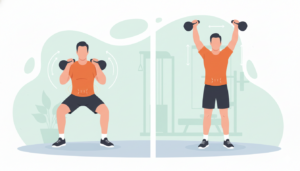
From weights at your thighs, hinge slightly, “clean” the weights to your shoulders, then press overhead. Keep ribs down and back neutral.
Do 3 sets × 6–10 reps, rest 90 seconds.
Beginner option: split it into RDL (hinge) + shoulder press as two separate moves.
Goblet Squat
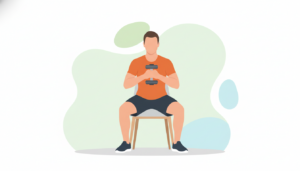
Hold one dumbbell/kettlebell at your chest. Sit down like you’re aiming for a chair, knees track with toes, chest up.
Do 3 sets × 8–12 reps.
Beginner option: chair squats (sit/stand from a chair) for knee-friendly control.
Cross-Body Mountain Climbers
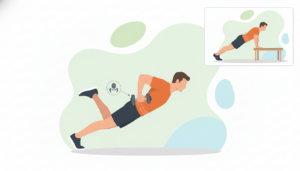
Get into a plank, brace your core, keep hips steady. Drive right knee toward left elbow, then switch sides—prioritize stability over speed.
Do 20–30 seconds work, rest 40–60 seconds, repeat 8–10 rounds.
Low-impact: do them slower, or place hands on a bench (incline climbers) to reduce wrist/shoulder load.
4-week belly-fat workout schedule (3 tracks)
Pick Track A/B/C and your next 28 days are handled—plus what to do when life interrupts.
Track A — Beginner / Low-impact (knee/back-friendly)
- Day 1: Strength + core
- Day 2: Zone 2 20–30 min
- Day 3: Rest or easy walk
- Day 4: Strength + core
- Day 5: Zone 2 20–35 min
- Weekend: optional walk + mobility
Progress: add 5 minutes to one walk/week + add reps before load.
Track B — Standard mix (most sustainable “best of both”)
- Day 1: Strength + core
- Day 2: Zone 2 25–40 min
- Day 3: Rest/steps focus
- Day 4: Strength + core
- Day 5: HIIT 12–18 min or Zone 2 (if tired)
Progress: Weeks 1–2 keep HIIT to 1×; Weeks 3–4 add 1 interval if sleep/soreness are solid.
Track C — Time-crunched (20–25 min sessions)
- Day 1: Strength circuit (20–25 min)
- Day 2: Brisk walk (20–25 min)
- Day 3: Strength circuit + 5-min core
- Day 4: Rest or 10-min walk
- Day 5: Low-impact intervals (12–15 min)
If you miss a day: don’t double up—just do the next planned session.
Quick “Pick Your Plan” Comparison Table
If you’re torn between walking, HIIT, or strength—this table makes the choice obvious.
| Goal / Situation | Best Focus | Weekly Minimum | Best If You… | Watch-outs |
|---|---|---|---|---|
| Sustainable belly change | Zone 2 + full-body strength | 3 days | want repeatable plan | don’t go all-out daily |
| Faster fitness gains | Zone 2 + strength + 1 HIIT | 4 days | recover well | too much HIIT = burnout |
| Knee/back sensitive | Low-impact + controlled strength + stability core | 3 days | need swaps | avoid jumping/painful ranges |
| Time-crunched | Short strength circuits + brisk walks | 3 days | have 20–25 min | keep intensity controlled |
| Plateau | add steps/Zone 2 or add strength day | +1 change | can be consistent | change one lever only |
Health & Privacy Disclaimer
This 60-second checklist protects your joints, your health, and your data—especially if you’re new.
- This content is informational only and not medical advice. If you’re pregnant, have a health condition, dizziness, unexplained pain, or recent injury, consult a qualified clinician before increasing intensity.
- Warm up at least 5 minutes and ramp gradually.
- Use intensity cues (talk test). Stop if you feel sharp pain.
- Stop immediately for chest pain, fainting, severe shortness of breath, or sharp joint pain.
- Progress slowly: increase only one variable per week.
- Avoid extreme dieting—especially for teens who are still growing. Prioritize consistent meals, strength, and sleep.
- Review app permissions, data sharing, and privacy settings; only enable what you truly need.
FAQs (belly fat burning exercises—real-life scenarios)
What reduces belly fat faster: HIIT or walking?
Walking/Zone 2 is easier to repeat and recover from. HIIT can improve fitness but can burn you out if overused. Most people do best with walking + strength, then add 1 HIIT day if recovery is strong.
How many days per week should I work out to reduce belly fat?
Start at 3 days/week, build to 4–5 only when you’re recovering well.
Can I lose belly fat with only bodyweight workouts?
Yes—if you train full-body, progress slowly, and keep daily walking/steps consistent.
What if I can’t jump (knees/back)?
Use incline walking, bike, rower, or controlled step-ups for intervals.
Are ab workouts necessary? Which ones are safest?
Core work supports training, but doesn’t “target” belly fat. Use dead bugs, planks, Pallof press, and carries.
How long until I see changes in my waist?
Many notice energy/fitness first. Waist changes often show in 3–6+ weeks depending on consistency, steps, sleep, and eating habits.
What should I do if I’m not losing after 3–4 weeks?
Confirm consistency first. Then change one lever: +10–15 minutes Zone 2 twice/week or +1,000–2,000 steps/day or add one strength day.
Is it normal to gain weight when starting strength training?
Yes—water retention and muscle repair can temporarily raise scale weight. Track waist weekly and performance trends.

User Reviews