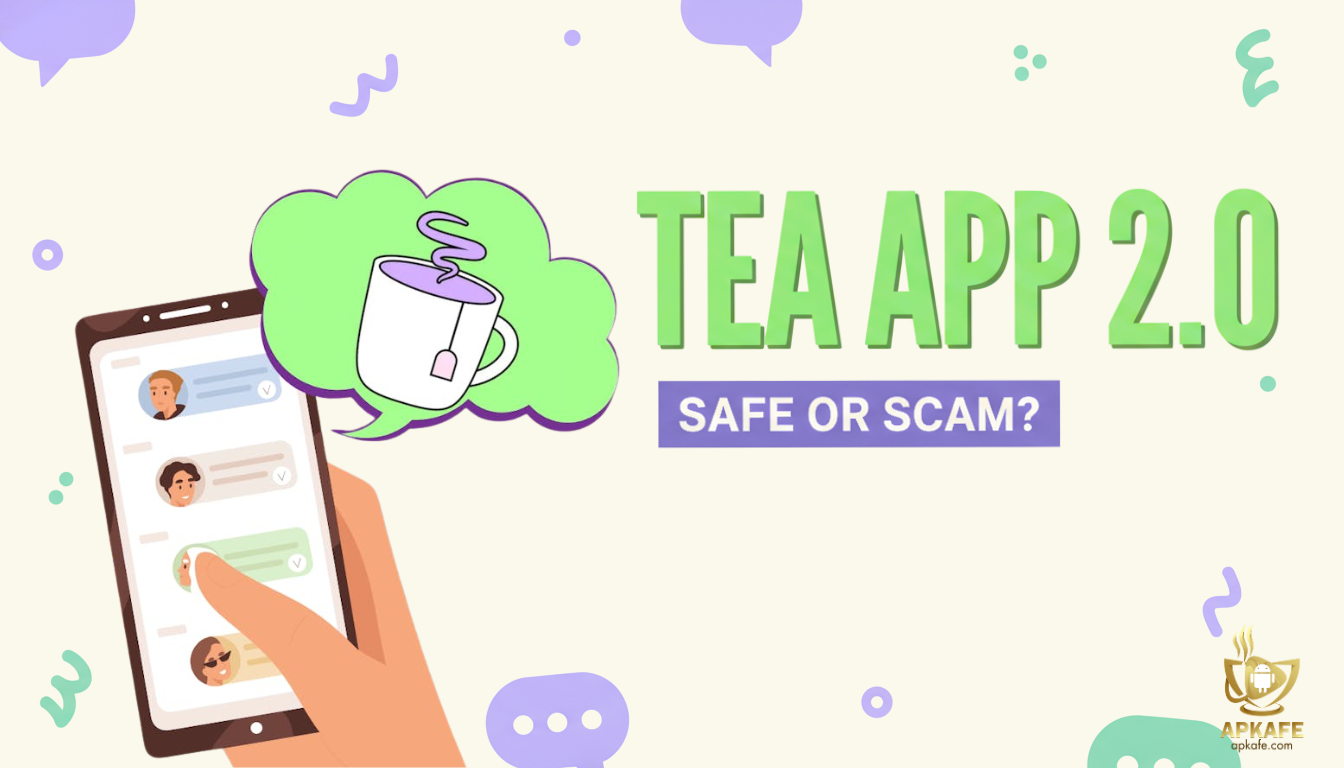




Tea App Safety Risks: Why Your “Digital Bodyguard” Is Actually Selling You Out
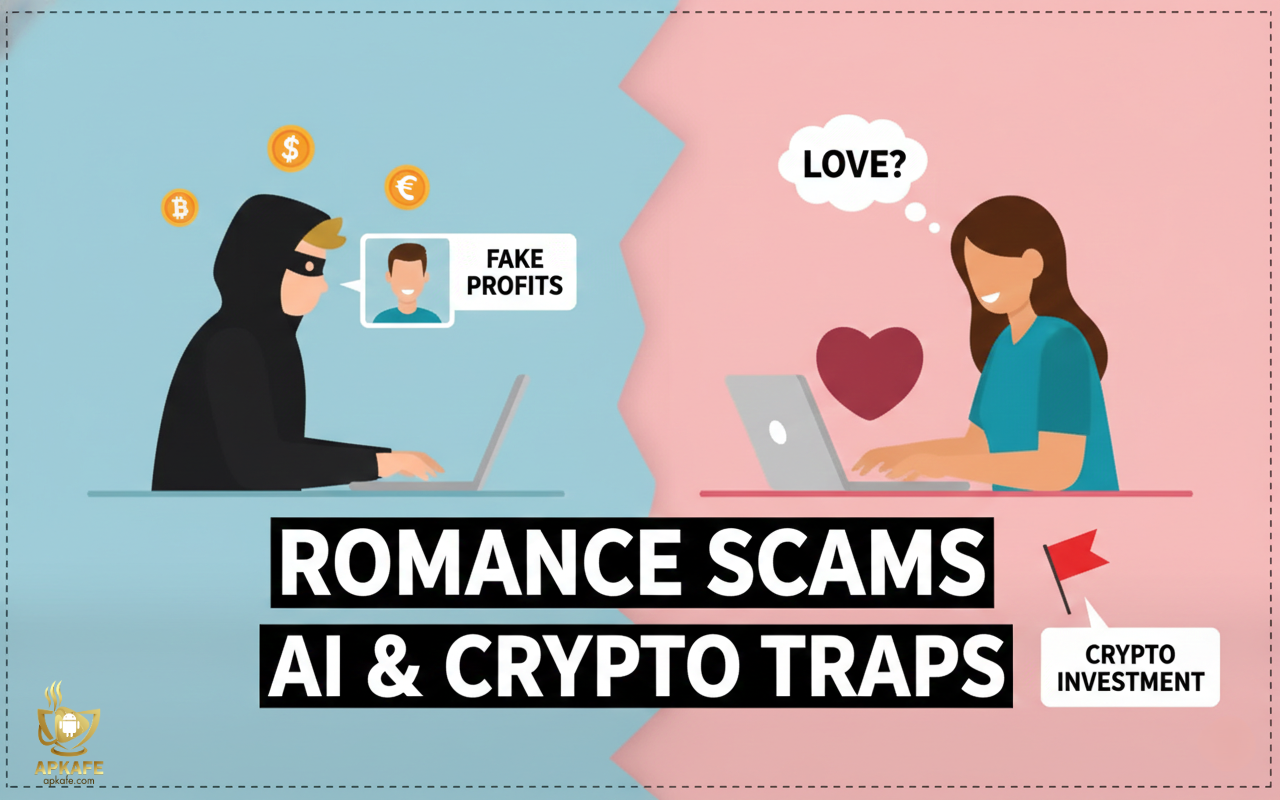
AI-powered “Tea Apps” promise to keep you safe while dating—but the truth is more complicated. By relying on crowdsourced gossip, facial scans, and anonymous warnings, these tools can quietly increase privacy risks, distort judgment, and create a false sense of control. In this guide, we break down the real Tea App safety risks, explain why outsourcing safety to algorithms often backfires, and show you how to protect yourself using clear boundaries, behavioral vetting, and human intelligence—without fear, paranoia, or surveillance.
🎯 The Illusion of the “Digital Shield”
Imagine this moment.
You’ve matched with someone on a dating app. The conversation feels natural. No obvious red flags. He seems polite, curious, and emotionally available. And yet—there’s a familiar knot in your stomach.
Is he safe?
Is he hiding something?
Am I about to waste weeks—or walk into something worse?
In previous generations, people relied on friends, family, or slow social vetting. Today, in 2026, we’ve been offered something faster and more seductive: AI-powered “Tea Apps.”
These apps promise to be your digital bodyguard. Upload a photo, scan a face, cross-reference crowdsourced “tea,” and get an instant verdict. Safe or unsafe. Green light or red flag.
It feels empowering—especially for women who are tired of being gaslit, ghosted, or placed in risky situations. It feels like control.
But here is the uncomfortable truth:
That digital bodyguard may be selling you out.
This article is not anti-safety. It is not anti-women. And it is not anti-technology.
It is about exposing the Tea App safety risks that quietly undermine privacy, distort judgment, and replace human wisdom with crowdsourced fear. It is also about showing you a better path—the Real Road—where safety comes from skill, clarity, and self-trust, not surveillance.
⚠️ The Hidden Truth About Tea App Safety Risks
Before we talk about solutions, we have to be honest about why these apps are so tempting in the first place.
1. The Psychology of Fear: Why We Download
At the core of human behavior is a simple instinct: Defend.
We download safety apps not because we love technology, but because dating has become emotionally and socially unsafe. Ghosting. Breadcrumbing. Situationships. Emotional manipulation. Occasionally, real physical danger.
Fear changes how we think. When fear is active, the brain looks for shortcuts—external authority that promises certainty.
Tea Apps understand this perfectly. They don’t market features. They market relief.
“You don’t have to trust your gut.”
“You don’t have to risk being wrong.”
“Just check the database.”
The problem is not that people want protection. The problem is what happens when intuition is outsourced to an algorithm.
A True Pattern (Composite Case)
Sarah met a man through an app. Before the first date, she scanned his face. The Tea App returned no warnings. “Clean.”
Relieved, she relaxed her boundaries. She agreed to a second date at his place. He hadn’t been flagged because he was new to the city.
The absence of data felt like safety. It wasn’t.
Absence of evidence is not evidence of safety.
This is one of the most dangerous Tea App safety risks: false reassurance. The app doesn’t just fail to protect—it actively lowers your guard.
2. The Trojan Horse: When Safety Tools Become Surveillance
Most Tea Apps are free. Free products are never free.
To function, they often request:
- Access to your photos
- Contact lists
- Location data
- Behavioral patterns (who you search, when, and how often)
While you believe you are vetting others, the system is quietly profiling you.
This creates a double vulnerability:
- You normalize surveillance culture
- You expose yourself to data misuse, leaks, or misuse by bad actors
Once facial data exists in a database, it does not disappear.
The Tea App safety risks here are structural, not accidental.
🔍 The Fake Road: Why Crowdsourced Vetting Fails
Let’s strip away marketing language and examine how these systems actually work.

1. Gossip Without Context Is Not Safety
Crowdsourced “tea” collapses complex human interactions into simplistic labels.
A man can be flagged for:
- Being emotionally abusive (serious)
- Ending a relationship abruptly (unpleasant but not dangerous)
- Refusing commitment
- Not paying for dinner
- Rejecting someone who felt entitled
The app does not distinguish between harm and hurt feelings.
For women, this creates constant background noise. Everything feels dangerous. When everything is a red flag, nothing is.
For men, the risk is existential. One anonymous accusation—without evidence, without due process—can permanently damage reputation.
This is not safe. This is crowdsourced judgment without accountability.
2. The False Sense of Control
Another core Tea App safety risk is the illusion of mastery.
When you rely on lists and scans, you stop practicing observation. You stop asking questions. You stop noticing patterns. You stop building discernment.
At the same time, genuinely dangerous people adapt. They rotate photos. They change names. They avoid detection.
The result is a tragic inversion:
- Good people become paranoid
- Bad people become more strategic
Dating becomes less human, less trusting, and more adversarial.
This is one of the reasons many people report dating fatigue in the age of AI, where every interaction feels transactional and exhausting rather than connective (a theme explored deeply in bold anchor dating fatigue with AI ).
🛠️ The Real Road: From Artificial Intelligence to Human Intelligence
If the Fake Road is outsourcing safety, the Real Road is building internal capability.
True safety does not come from prediction. It comes from discernment.
We use a simple but powerful framework:
The OAS Framework
Observe → Analyze → Synthesize
Step 1: OBSERVE — Why Video Beats Facial Recognition
Texting provides almost no data. Photos provide curated data.
Video provides behavioral data.
A 10–15 minute video call reveals:
- Consistency with photos
- Emotional regulation
- Respect for time and boundaries
- Presence or distraction
- Subtle dominance or entitlement cues
Predators avoid video. It removes anonymity and control.
This single step filters out the majority of Tea App safety risks before you ever meet in person.
Practical Rule:
No video call, no date.
This is not paranoia. It is intelligent filtering.
Step 2: ANALYZE — Boundaries Reveal Character
Safety is not about predicting the future. It is about testing the present.
Set a small, reasonable boundary early:
- Reschedule a date
- Say no to a last-minute change
- Delay moving off the app
Observe the response.
Respect is calm. Pressure is information.
This aligns closely with building clear online dating boundaries, especially verbal boundaries that protect emotional and physical safety (see bold anchor online dating boundaries sentences ).
If someone pushes small boundaries, they will push larger ones later.
Step 3: SYNTHESIZE — Protecting Your Digital Identity
Many Tea App safety risks exist because people overshare.
The Low-Profile Dating Strategy
- Use unique photos
Do not reuse Instagram photos. Reverse-image search is real. - Generalize identifying details
Say “tech” instead of company names. - Delay moving platforms
Stay on the dating app until trust is earned. - Control narrative pace
Oversharing early creates leverage for manipulation.
These practices reduce your vulnerability far more than any database.
🧠 Emotional Safety: Why Desperation Blinds Judgment
Many unsafe dating decisions are not made because people are foolish—but because they are emotionally depleted.
When loneliness spikes, the brain prioritizes bonding over discernment.
This is why slow, intention-driven dating movements are growing, including bold anchor soft partying dating and Gen Z’s shift toward clarity and values (explored in bold anchor Black Gen Z daters are dating with intention).
When you are emotionally regulated, red flags stand out naturally. When you are desperate, you rationalize them away.
👥 For Men: Navigating False Accusation Anxiety
Men face a different dimension of Tea App safety risks: reputational harm without recourse.
If you are a decent man:
- Be clear about intentions
- Communicate directly
- Respect boundaries consistently
Do not attempt to “counter-surveil” or retaliate. That deepens the system you fear.
Integrity is not loud, but it is durable.
If someone relies more on anonymous lists than lived interaction, they are not emotionally ready for trust-based relationships.
🌱 Expanding Safety Beyond Apps: Real-World Vetting
One overlooked way to reduce digital risk is meeting people in structured offline environments, where social context does some of the “vetting” for you. Activity-based spaces—like sports clubs, run groups, and community events—create built-in accountability because people show up repeatedly, interact with others, and leave a trail of real-world behavior.
If you want a low-pressure starting point, try the approach in meet singles through run clubs in the US, which breaks down how to turn casual group attendance into natural conversations without forcing chemistry.
And if you’re introverted or tend to overthink first moves, a detailed 14-day action plan for introverts to meet singles through sports events gives you a step-by-step routine so you’re not relying on “confidence spikes” or random luck.
These environments reduce the need for surveillance because behavior becomes observable over time—and consistency is the one “signal” no anonymous database can fake.
📋 The Real Digital Bodyguard Checklist
Phase 1: Setup (One-Time)
- Audit dating photos (unique only)
- Review app permissions
- Google your own name and request removals
Phase 2: Filtering (Ongoing)
- Video call before meeting
- Public first dates
- Share live location with a trusted human, not an app
Phase 3: Mindset (Daily)
- Trust discomfort
- Prioritize behavior over words
- Remember: clarity is kinder than paranoia
🛡️ SAFETY CALLOUT BOX
The Real Dating Safety Rules (Save This)
Before you trust a person, trust the process.
- Slow > Fast: If things escalate too quickly, pause. Real safety doesn’t rush intimacy.
- Test small boundaries early: A calm response = respect. Pressure = information.
- Video before meeting: No quick video call, no in-person date.
- Public first, always: Choose places with people, staff, and easy exits.
- Keep one area private: Your address, family, or routine stays off-limits at first.
- Your body knows first: Discomfort is data. You don’t need “proof” to leave.
👉 Reminder:
Someone who is right for you will never require you to ignore your own safety.
❓ Frequently Asked Questions About Dating Safety & AI Vetting
Is using a “Tea App” or AI background check actually safe?
AI vetting tools can create a false sense of security. They rely on incomplete, crowdsourced data and cannot verify context, intent, or accuracy. Real safety comes from observing behavior over time—not from anonymous databases.
Why can crowdsourced “tea” be dangerous?
Because it often mixes real harm with personal resentment. Serious abuse and minor dating disappointments are treated the same, which creates noise, paranoia, and reputational harm without accountability.
What’s safer than scanning someone with an app?
Behavioral vetting.
Video calls, boundary-setting, and public meetings reveal far more than facial scans. How someone reacts to “no” tells you more than any list ever could.
How early should I set boundaries when dating?
Immediately—but gently.
Small boundaries early (rescheduling, delaying contact off-app) are the safest way to assess respect without confrontation.
What are early red flags that matter most for safety?
- Pushing past small boundaries
- Guilt-tripping or pressuring
- Disrespect toward staff or strangers
- Rushing privacy or intimacy
These patterns matter more than any rumor or review.
Can men really be harmed by anonymous dating “warning lists”?
Yes. Anonymous accusations—without verification or due process—can cause long-term reputational damage, even when false. This harms trust on both sides and makes dating more adversarial.
How can I stay safe without becoming paranoid?
Safety is a skill, not a mindset of fear.
When you have clear boundaries, observation habits, and digital hygiene, you don’t need constant suspicion—you have clarity.
What’s the safest mindset to bring into dating in 2026?
Self-trust over surveillance.
Technology can assist, but it should never replace your judgment, intuition, and ability to leave when something feels wrong.
🎁 Conclusion: You Are the Technology
Tea Apps promise safety through surveillance. But the cost is trust, privacy, and human judgment.
The deepest Tea App safety risks are not technical. They are psychological.
They teach you to doubt yourself.
The Real Road is harder. It asks you to slow down, observe, and choose consciously. But it gives you something no algorithm can offer:
Self-trust.
And self-trust is the only safety that scales.
You are not unsafe because you lack technology.
You are unsafe when you forget your own wisdom.
Choose the path of mastery, not fear.

User Reviews