


How to Follow a Keto Diet for Weight Loss (Beginner-Friendly Guide)
Starting a keto diet for weight loss can feel overwhelming—confusing food lists, fear of side effects, and mixed advice online. That confusion often leads beginners to quit before seeing any benefits. The good news? Keto doesn’t have to be extreme or complicated. When done thoughtfully, it can be a structured, low-carb approach that helps many people manage appetite and support gradual weight loss. In this guide, you’ll learn what the ketogenic diet is, how it works, and exactly how to start step by step. We’ll cover what to eat, common mistakes, safety considerations, and how beginner-friendly apps can simplify carb tracking and meal planning. By the end, you’ll have a realistic, safety-first plan—and know when keto may not be the right fit for you.
What Is the Keto Diet and How Does It Work for Weight Loss?
Understanding the “why” behind keto makes it easier to follow and safer to adjust.
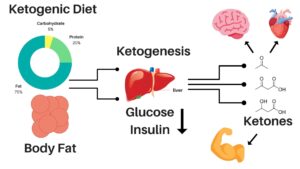
The keto (ketogenic) diet is a very low-carbohydrate, high-fat eating pattern. Typically, carbs are reduced to ~20–50 grams per day, with moderate protein and higher fat intake. This shift encourages the body to enter ketosis, a metabolic state where fat is used as a primary fuel instead of glucose.
For weight loss, keto may help some people by reducing hunger, stabilizing blood sugar swings, and simplifying food choices. Results vary—keto is not magic, and it doesn’t work the same for everyone.
Ketosis in simple terms
Ketosis happens when carb intake is low enough that your liver produces ketones from fat. These ketones become an alternative energy source.
Keto vs. low-carb diets
Low-carb diets reduce carbs but may not trigger ketosis. Keto is stricter and requires more tracking—especially at the beginning.
Before You Start a Keto Diet — What Beginners Should Check First
A short check-in now can prevent fatigue, frustration, and health issues later.
- Health conditions: People with diabetes, kidney disease, eating disorders, or who are pregnant/breastfeeding should consult a professional first.
- Expectations: Early weight loss often includes water weight; long-term fat loss is slower.
- Lifestyle fit: Keto requires planning—especially for meals and social events.
Step-by-Step: How to Start a Keto Diet for Weight Loss

Follow these steps in order to make keto simpler and more sustainable.
Step 1: Calculate your keto macros
Most beginners aim for ~70% fat, 20–25% protein, and 5–10% carbs. Apps can help automate this math.
Step 2: Choose keto-friendly foods
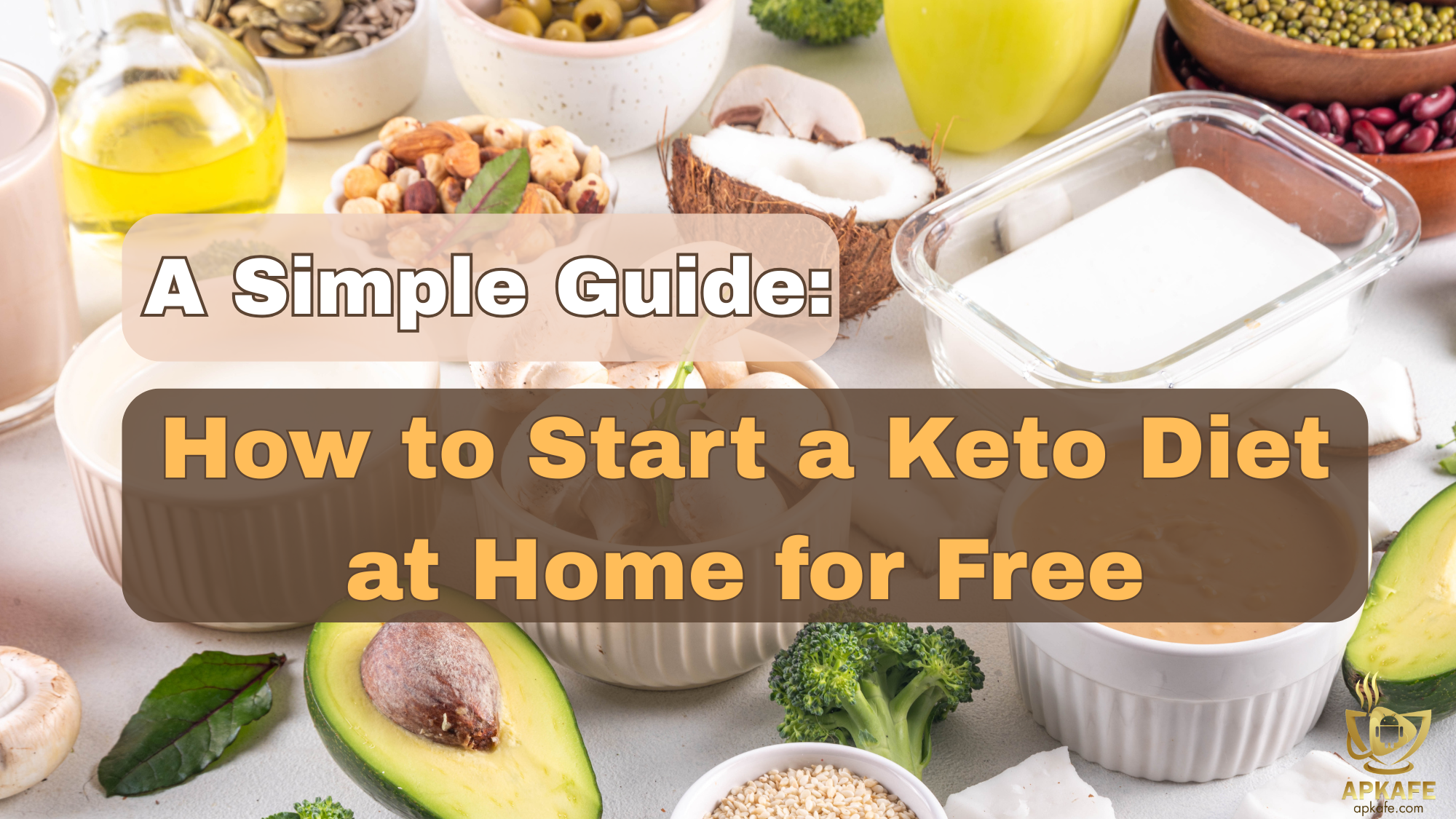
Focus on non-starchy vegetables, eggs, fish, meat, nuts, seeds, oils, and full-fat dairy. Avoid sugars, grains, and most fruits.
Step 3: Plan easy keto meals
Simple meals reduce decision fatigue. Tools like Lazy Keto Diet Meal Planner can help beginners batch-plan meals.
Step 4: Track carbs and progress
Tracking is crucial early on. Apps such as Carb Manager – Keto Diet Tracker or Keto Diet App: My Food Tracker simplify logging and reduce guesswork.
Step 5: Adjust and stay consistent
Give your body 2–4 weeks to adapt. If energy drops sharply, review electrolytes and calorie intake.
Easy Keto Diet Tips for Sustainable Weight Loss
Small, flexible habits help keto feel livable—not restrictive.
- Swap rice for cauliflower rice
- Use olive oil or avocado oil for cooking
- Prioritize hydration and electrolytes
- Plan ahead when eating out
For more tools, explore the best keto diet apps to track carbs and plan meals
What to Eat, What to Drink, and What to Avoid on a Keto Diet
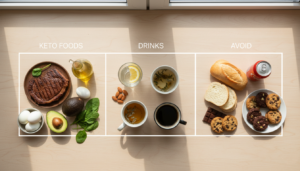
Knowing exactly what to eat, drink, and avoid helps you enter ketosis faster and avoid common beginner mistakes.
✅ What to Eat on a Keto Diet
These foods are low in carbs, nutrient-dense, and help keep you full longer.
Proteins & Core Foods
- Meat: beef, chicken, pork, lamb (grilled, baked, or pan-cooked)
- Fatty fish: salmon, mackerel, sardines
- Eggs (one of the most beginner-friendly keto foods)
Healthy Fats
- Olive oil, avocado oil, coconut oil
- Avocados and olives
- Nuts and seeds (almonds, walnuts — in moderation)
Low-Carb Vegetables
- Leafy greens: spinach, lettuce, kale
- Broccoli, cauliflower, zucchini
- Cucumber, asparagus
👉 Beginner tip: Hidden carbs add up quickly. Using a tracker like Carb Manager – Keto Diet Tracker can help you stay within your daily carb limit without stress.
🥤 What to Drink on a Keto Diet
Staying hydrated is essential, especially during the first weeks of keto.
Best Drinks
- Water (your top priority)
- Sparkling or mineral water (for electrolytes)
- Unsweetened tea (green, black, herbal)
- Black coffee (optional: add a small amount of heavy cream, no sugar)
Electrolytes (especially early on)
- Sodium, potassium, magnesium — often depleted when carbs are reduced
👉 Practical tip: Headaches and fatigue are often signs of dehydration or low sodium, not keto “failure.”
❌ What to Avoid on a Keto Diet
These foods and drinks can easily push you out of ketosis.
High-Carb Foods
- Sugar, honey, syrups
- Bread, rice, pasta, cereal
- Potatoes, sweet potatoes, corn
- Most fruits (especially bananas, mangoes, grapes)
Drinks to Avoid
- Soda and soft drinks
- Fruit juice and smoothies
- Sweetened milk drinks and bubble tea
- Beer and sugary cocktails
Processed & “Hidden Carb” Foods
- Low-fat packaged snacks (often high in sugar)
- Sauces and dressings with added sugar
- “Sugar-free” foods with high-carb fillers
👉 Important note: “Sugar-free” does not always mean keto-friendly. Logging foods with Keto Diet App: My Food Tracker helps catch hidden carbs.
📋 Quick Keto Checklist (Beginner-Friendly)
| Eat More Of | Drink | Avoid |
|---|---|---|
| Meat, fish, eggs | Water | Sugar, sweets |
| Leafy greens | Unsweetened tea | Bread, rice, pasta |
| Healthy oils & fats | Black coffee | Soda, fruit juice |
| Avocados, nuts (moderate) | Mineral water | Sweet fruits |
Common Keto Mistakes, Pitfalls, and Pro Tips
Many beginners quit keto due to avoidable errors.
Common mistakes:
- Eating too much protein
- Not tracking hidden carbs
- Ignoring hydration and minerals
Pro tips:
- Keep meals simple
- Track consistently for the first month
- Adjust gradually, not overnight
Contraindications & When to Stop or Ask an Expert
Listening to your body is part of doing keto responsibly.
Stop and consult a professional if you experience dizziness, fainting, confusion, or worsening symptoms, especially if you have existing medical conditions.
Safety & Privacy (Health)
Protect both your health and your personal data while dieting.
- Educational only — not medical advice.
- Listen to your body. Stop if symptoms occur and seek help.
- Consult a professional before major diet changes.
- Apps are not medical devices.
- Privacy: Review permissions, data sharing, and deletion options; prefer on-device storage where possible.
FAQs About the Keto Diet for Weight Loss
Clear answers to common beginner concerns.
Is keto safe for long-term weight loss?
For some people, yes—but it depends on individual health, preferences, and sustainability.
How fast will I lose weight on keto?
Initial loss may be rapid due to water weight; fat loss is typically gradual.
Do I need to count calories on keto?
Not always, but awareness helps—especially if weight loss stalls.
Can I exercise on keto?
Yes, though performance may dip during adaptation.
What if keto feels too restrictive?
A moderate low-carb approach may be more sustainable.

User Reviews