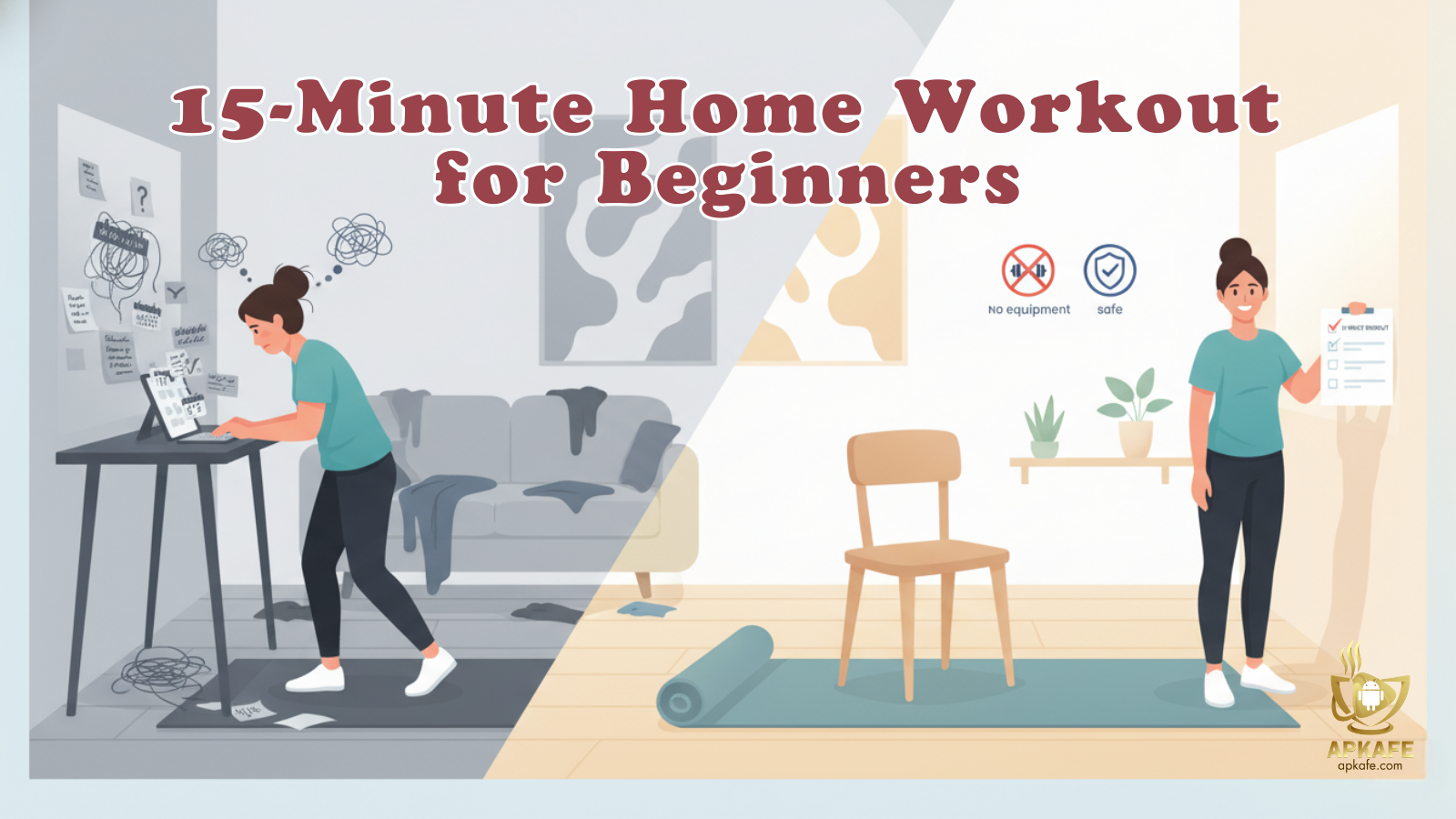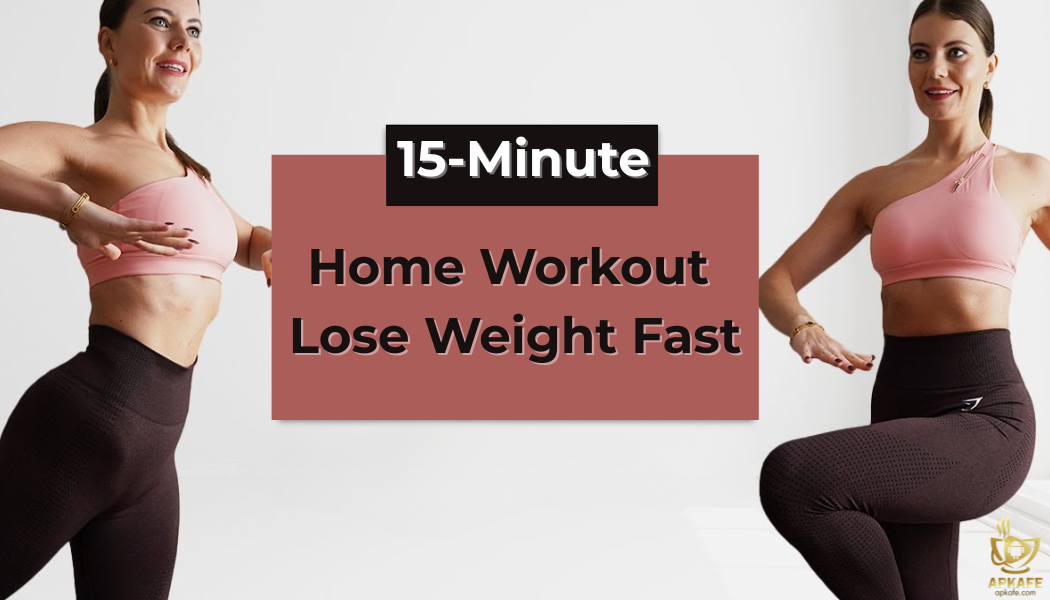




Simple Home Workout for Beginners: A Safe, 15-Minute Routine You Can Start Today
because they start with routines that are too hard, too long, or too confusing and that early frustration turns into soreness, self-doubt, and stopping. Here’s the good news: you don’t need equipment, a gym membership, or an hour of free time. A simple home workout for beginners, done with good pacing and safe form, can build strength, improve energy, and most importantly—create a habit you’ll actually keep. By the end of this guide, you’ll have a 15-minute routine so simple that skipping it will feel harder than doing it.
Benefits of Easy Home Workouts for Beginners
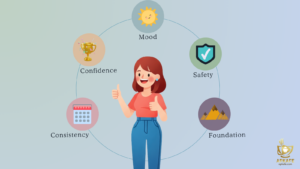
Easy workouts may look simple but for beginners, they unlock benefits that hard workouts often can’t.
Starting with easy, low-pressure workouts isn’t about doing less. It’s about building the right foundation so fitness becomes part of your life, not something you quit after a week.
1. Build Consistency Without Overwhelm
Easy workouts reduce the mental barrier to starting. When a routine feels achievable, beginners are far more likely to show up repeatedly.
Real-life context: On days when motivation is low, a 15-minute plan feels like something you can still do—even between meetings, after work, or before dinner. That “I can handle this” feeling matters more than intensity.
2. Lower Risk of Injury and Burnout
Beginner-friendly workouts focus on controlled movements and proper pacing, which helps protect joints, muscles, and confidence.
Why it matters: Early injuries or extreme soreness are one of the top reasons beginners stop exercising altogether—often telling themselves they’ll “start again later,” which turns into months.
3. Improve Energy and Mood Faster Than You Expect
Easy workouts often increase energy instead of draining it.
What beginners notice first: better mood, less stiffness, and that subtle “I’m glad I moved today” feeling, especially if you’ve been sitting most of the day.
4. Build Confidence Through Small Wins
Completing an easy workout creates a psychological win.
That win isn’t physical—it’s identity-based. Over time, beginners stop thinking, “I should work out,” and start thinking, “I don’t skip this anymore.”
5. Create a Strong Base for Long-Term Fitness
Easy workouts help you master the basics before intensity enters the picture—so progress feels earned, not forced.
Before You Start: What Beginners Should Prepare
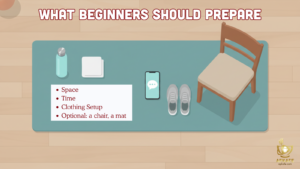
Skipping this section is the fastest way to feel sore, overwhelmed, or “behind” after day one.
Health & Safety Prerequisites
If you remember only one thing from this section, make it this: you’re not here to prove anything.
You’re here to build a routine your body doesn’t fight against. Beginners don’t need intensity—they need safety, repeatability, and trust in their own signals.
- Warm up first. Even a short warm-up helps your body transition into movement.
- Use the “talk test.” You should be able to speak a short sentence while exercising.
- Stop if you feel warning signs. Chest discomfort, unusual shortness of breath, dizziness/lightheadedness, nausea, or feeling faint are reasons to stop and seek help. (If severe, seek emergency care.)
- If you have medical concerns, injuries, or chronic pain, consult a qualified healthcare professional before starting.
Space, Time, and Clothing Setup
A 30-second setup makes a 15-minute workout feel twice as easy.
- Space: Clear enough room to step side-to-side and extend arms.
- Footwear: Barefoot can be okay on a mat for balance work, but supportive shoes can help if your ankles/knees feel unstable.
- Time: Pick a repeatable slot (morning, lunch, or right after school/work).
- Optional: A sturdy chair (for support) and a mat (for comfort).
Optional guidance: If you want structure and reminders, see Best Workout App for Beginners.
The Simple 15-Minute Home Workout Routine for Beginner
By the end of this section, you’ll know exactly what to do—minute by minute without guessing.
Step 1: Gentle Warm-Up (3 Minutes)
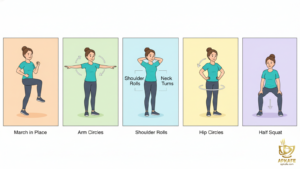
This prevents the soreness that makes beginners quit after day one.
Do these moves slowly and controlled:
- March in place — 60 seconds
- Arm circles — 30 seconds (small to medium)
- Shoulder rolls + gentle neck turns — 30 seconds
- Hip circles — 30 seconds
- Half-depth squats — 30 seconds (comfortable range)
Common mistake: Rushing because it “doesn’t count.”
Micro-tip: Warm-up pace = you can still talk.
Cool-down stretching should be strong but not painful, and don’t bounce.
Step 2: Beginner Strength & Movement Circuit (8–10 Minutes)
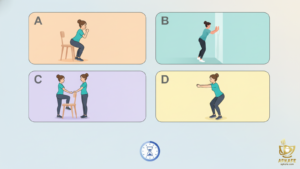
These moves train your whole body safely—without equipment.
Complete exercises A–D in order. Rest 30–60 seconds between moves as needed.
A) Chair or Bodyweight Squats (8–12 reps)
- Focus: legs, glutes, balance
- How: Sit your hips back like you’re lowering into a chair; stand tall.
Form cue: Knees track roughly over toes; chest stays proud.
Easier: Sit-to-stand from a chair.
Harder: Add 2 reps or slow the lowering phase (3 seconds down).
B) Wall Push-Ups (6–10 reps)
- Focus: chest, shoulders, arms
- How: Hands on wall at chest height; body in a straight line; bend elbows slowly.
Form cue: Keep shoulders down (don’t shrug).
Easier: Stand closer to the wall.
Harder: Stand farther from the wall.
C) Standing Knee Raises (10 per side)
- Focus: core, hip flexors, balance
- How: Lift one knee toward chest; alternate sides.
Form cue: Stand tall; don’t lean back.
Easier: Hold a chair for support.
Harder: Pause 1 second at the top.
D) Arm Reaches or Light Shadow Boxing (30–45 seconds)
- Focus: light cardio + coordination
- How: Reach overhead and forward in rhythm—or do gentle, controlled punches.
Form cue: Keep breathing; shoulders relaxed.
Easier: 20 seconds only.
Harder: 45 seconds at a slightly faster pace.
Repeat option: If you have time and feel good, repeat the circuit once more (total ~15 minutes). If not, stop after one round and be proud—that’s how habits start.
Step 3: Cool-Down & Breathing (2–3 Minutes)

Skipping this step can make tomorrow feel harder than it should.
- Slow march/walk — 60 seconds
- Hamstring stretch — 30 seconds each side
- Chest/shoulder stretch — 30 seconds
- Breathing — 60 seconds (inhale 4, exhale 6)
Stretches should be strong but not painful, and no bouncing.
Simple Fitness Routine at Home: Weekly Structure
One workout is a win. But a simple weekly plan is how beginners actually get fit.
3-Day Beginner Schedule (Start Here)
- Mon: 15-minute routine
- Wed: 15-minute routine
- Fri: 15-minute routine
Optional: Light walk or easy mobility on Tue/Thu.
This aligns with mainstream guidance emphasizing weekly activity totals and strength work over time (you’re starting with small “chunks” you can build on).
How to Progress Without Over training (Weeks 3–4)
Pick one change at a time:
- Add 1–2 reps per move, OR
- Add a second circuit round, OR
- Reduce rest slightly (from 60s → 45s)
Beginner rule: If you’re getting consistently sore or dreading workouts, you progressed too fast—scale back.
Want a guided plan (especially if you like reminders)? Check Get Fit at No Cost: Best Free Fitness Apps to Try Now
Common Beginner Mistakes (And How to Fix Them)
If you’ve quit before, one of these is probably why.
- Doing too much too soon
Fix: Start with one circuit round. Add later. - Skipping warm-up/cool-down
Fix: Keep them short, but always do them. Warm-up and cool-down are widely recommended basics. - Holding your breath
Fix: Exhale on effort (standing up from squat, pushing away from wall). - Comparing yourself to advanced routines
Fix: Compare today vs last week, not you vs creators online. - No plan for recovery
Fix: Sleep + rest days. (If you’re curious about recovery patterns, see Top Sleep Trackers to Improve Health and Recovery
Pro Tips to Stay Consistent at Home
Motivation fades—simple systems keep you going.
- Use the “minimum workout” rule: even 5 minutes counts on low-energy days.
- Stop while you still feel okay: finishing with energy builds confidence.
- Tie it to a daily habit: after brushing teeth → workout.
- Track wins, not perfection: “3 workouts this week” is a win.
Nutrition helps energy and recovery too. If you’re navigating special nutrition needs, you can reference Balanced Diet for Diabetics: Simple Guide as a starting point for balanced-meal ideas.
Beginner Home Workout Checklist (60-Second Self-Test)
In under a minute, you’ll know if today’s workout is actually beginner-safe.
| Checklist Item | Why It Matters | Quick Fix |
|---|---|---|
| Warm-up done (3 min) | Less soreness/injury risk | March + arm circles |
| I can talk in short sentences | Right intensity for beginners | Slow down |
| Form is controlled | Protects joints | Fewer reps |
| I’m breathing normally | Better endurance | Exhale on effort |
| I can repeat tomorrow | Consistency > intensity | Shorten session |
| I feel tired, not crushed | Prevents burnout | Stop earlier next time |
| I have a rest day planned | Recovery builds progress | Schedule it now |
Health & Privacy Disclaimer

A safe workout protects both your body and your personal data.
This guide is general fitness education only and not medical advice. Stop exercising and seek medical help if you experience concerning symptoms (for example, chest discomfort or feeling faint).
If you use fitness apps:
- Review what data is collected (health/activity, location, identifiers)
- Turn off permissions you don’t need
- Avoid sharing sensitive personal details
- Read the app’s privacy policy before long-term use
FAQs
These answers remove the doubts that stop most beginners from starting.
Is a 15-minute workout really enough for beginners at home?
Yes, especially in the beginning. The goal isn’t to exhaust you. It’s to build a routine your body and schedule both accept. From there, progress becomes natural instead of forced.
How many days per week should I do this routine?
Start with 3 days per week, then move to 4 if you feel good. Rest days help your body adapt.
Do I need equipment?
No. You can use a wall and (optionally) a chair for support.
What if I’m overweight or very unfit?
Use the easiest options: sit-to-stand squats, closer-to-wall push-ups, and chair-supported knee raises. Go slower, rest longer, and focus on form.
Can I do this every day?
You can do light movement daily, but for strength, many beginners do best with workout days + rest days so soreness doesn’t derail the habit.
What if I miss a day?
Resume at the next planned session. Don’t “punish” yourself with extra workouts.
How do I know if I’m pushing too hard?
If you feel dizzy, unusually short of breath, or have chest discomfort—stop. If you’re simply tired, scale down reps and slow your pace next time.

User Reviews