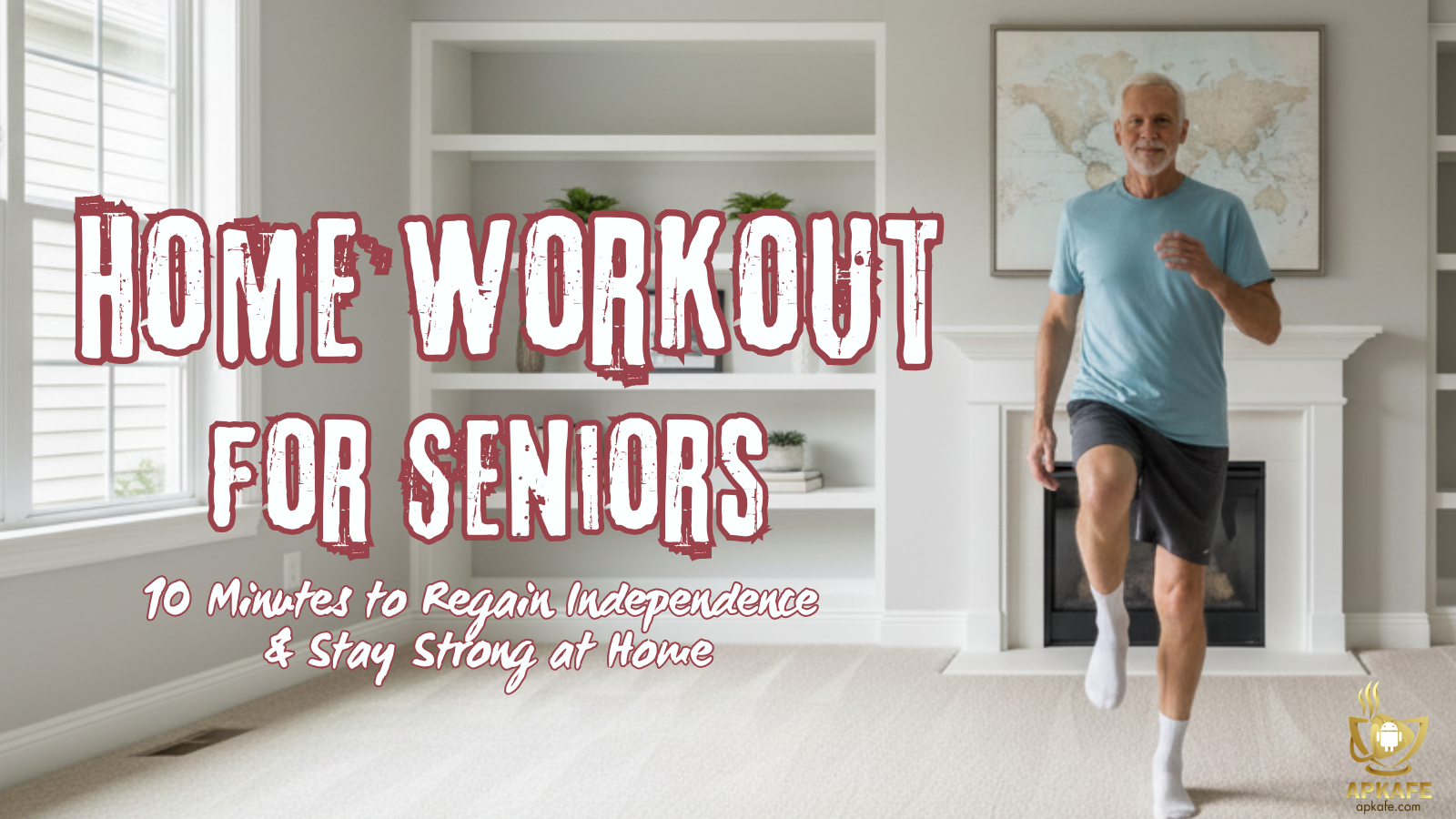




Home Workout for Seniors: 10 Minutes to Regain Independence & Stay Strong at Home
Have you noticed that everyday tasks, like getting up from the sofa, climbing stairs, or carrying groceries, now require more effort than before? For many older adults, this isn't simply a matter of physical strength. It's about body control, controlling daily life, and building independence without relying on others. That's why we created this at-home workout for seniors. Each movement is designed to strengthen the muscle groups you use most in real life – so you can get up confidently, move safely around the house, and continue living your own way, starting today.
Why Many Seniors Stop Exercising (And It’s Not Lack of Willpower)

Many seniors blame themselves for “not being disciplined enough” when exercise habits fade but willpower is rarely the real issue. In most cases, older adults stop exercising because the system around them isn’t designed for their bodies, needs, or daily realities.
Exercise Feels Dangerous, Not Helpful
Most workout programs online are built for younger bodies. When seniors try them, they often experience:
- Knee pain
- Lower back discomfort
- Fear of losing balance
After just one bad experience, the brain connects exercise with risk, not benefit.
👉 A true home workout for seniors must feel safe from the very first minute.
Pain Is Misunderstood
Younger people expect muscle soreness. Seniors don’t.
For many older adults, pain equals injury. Without clear guidance on what discomfort is normal and what is not, quitting feels like the safest option.
👉 Seniors don’t stop because they’re weak.
👉 They stop because they’re protecting themselves.
Progress Is Invisible
Seniors aren’t chasing six-pack abs. They want:
- To stand up without effort
- To walk steadily
- To wake up with less stiffness
These benefits are real—but subtle. When no one points them out, exercise feels pointless.
This is why home workouts for seniors must focus on function, not appearance.
Life Gets in the Way
Doctor visits, medications, poor sleep, family responsibilities—daily life is already demanding.
If a workout:
- Takes too long
- Requires equipment
- Needs too much energy
…it’s the first habit to disappear.
That’s why the best home workout for seniors lasts 10 minutes or less and fits naturally into daily routines.
Fear of “Doing It Wrong”
I’ve heard this countless times:
“I’m afraid I’ll damage my joints if I exercise incorrectly.”
Conflicting advice online creates anxiety. And anxiety kills consistency.
👉 For seniors, confidence matters more than motivation.
Why Home Workouts for Seniors Are Essential
Preserve Independence in Everyday Tasks
Strength and mobility exercises make it easier to stand up from a chair, climb stairs, carry groceries, and move around the house without assistance. This independence directly improves quality of life and reduces reliance on others.
Reduce Fall and Injury Risk
Balance and leg-strength exercises are critical for fall prevention. Even gentle at-home workouts improve coordination and reaction time, lowering the risk of slips and serious injuries such as hip fractures.
Protect Joints and Manage Pain
Low-impact movement lubricates joints, strengthens surrounding muscles, and can ease stiffness from conditions like arthritis. When done correctly, workouts reduce pain rather than cause it.
Support Heart, Brain, and Mental Health
Consistent physical activity helps regulate blood pressure, supports heart health, and improves circulation to the brain. Seniors who stay active often experience better mood, memory, and sleep quality.
Maintain Muscle and Bone Strength
After age 60, muscle mass and bone density decline more rapidly. Simple resistance and weight-bearing exercises at home help slow this process and reduce the risk of osteoporosis-related fractures.
The Safety Foundation: Don’t Skip This Step
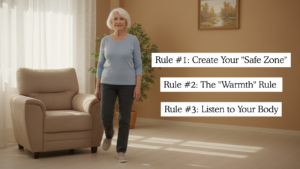
Before we dive into this home workout for seniors, we must set the stage. True independence requires preparation, not just effort. You wouldn’t drive a car without checking the mirrors, right? Think of this checklist as your “pre-flight check” to ensure you stay in the driver’s seat of your health.
Most setbacks happen not because the exercise is hard, but because the setup was rushed. Here are the three non-negotiable rules to maintain total control over your safety:
Rule #1: Create Your “Safe Zone” (Control Your Environment)
You are the architect of your workout space. To perform this home workout for seniors effectively, your environment must work for you, not against you.
- The Chair Strategy: Choose a sturdy chair without wheels. This is your primary tool for stability. If it has armrests, even better—they provide extra leverage when standing up.
- Clear the Path: Remove loose rugs, cords, or clutter from a small 6×6 foot area. You want 100% focus on your movement, not on dodging obstacles.
- Footwear Matters: Never exercise in socks alone on a smooth floor—that is a slip waiting to happen. Wear flat, supportive shoes with good grip to give you a solid foundation.
Rule #2: The “Warmth” Rule (Prep Your Engine)
Imagine trying to start a car in freezing weather without letting it warm up. It’s rough on the engine. Your body is the same.
- Warmth Beats Intensity: Never start cold. Spend the first 3–5 minutes simply marching in place or swinging your arms gently.
- Why It Works: This isn’t wasted time. It signals your joints to produce lubrication and increases blood flow to your muscles. A warm muscle stretches; a cold muscle snaps. By warming up, you are actively preventing stiffness and ensuring a smoother session.
Rule #3: Listen to Your Body (You Are the Boss)
You know your body better than anyone else. In this routine, you are the CEO, and your body is the employee. You decide the pace.
- Good Pain vs. Bad Pain: Learn to distinguish the difference. A little muscle soreness or fatigue means you are getting stronger. However, sharp, shooting pain or sudden dizziness is a “Red Light.”.
- The Control Protocol: If you feel sharp pain or dizziness, stop immediately. Do not push through. Retaining your independence means knowing when to pause so you can fight another day.
The 10-Minute Home Workout Routine for Seniors (Do This in Order)
These moves look gentle but one small adjustment makes them safer and more effective.
How to use this routine
- Total time: ~10 minutes
- Rest: 15–30 seconds between moves
- Breathe normally—never hold your breath
1. Gentle March in Place
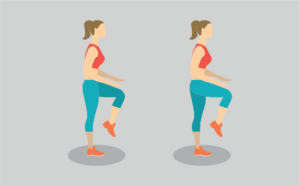
This is a safe warm-up exercise that helps the body ease into movement and reduces joint stiffness before starting other exercises.
How to perform
- Stand behind a chair and lightly hold the backrest
- Lift one foot at a time as if marching in place
- Move slowly and steadily for about 1 minute
Benefits
- Warms up muscles and joints
- Improves blood circulation
- Reduces the risk of dizziness at the start of a workout
Stop if: Dizziness or balance loss.
2. Chair-Assisted Squats
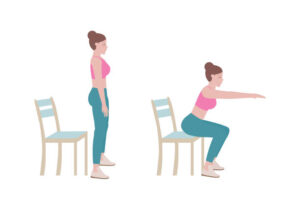
This exercise mimics the everyday action of sitting down and standing up, which is essential for seniors.
How to perform
- Stand in front of a chair
- Slowly lower yourself as if sitting down, lightly touching the seat
- Stand back up in a controlled manner
- Repeat 8–10 times
Benefits
- Strengthens thighs and glutes
- Makes daily movements like standing up easier
- Helps protect the knee joints
Stop if: Sharp knee pain.
3. Wall Push-Ups
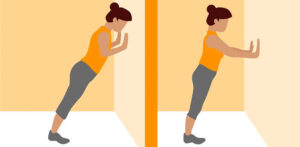
A gentle upper-body strengthening exercise that puts less stress on the shoulders and wrists than floor push-ups.
How to perform
- Stand facing a wall, hands placed at chest height
- Bend your elbows and lean toward the wall
- Push yourself back to the starting position
- Perform 8–12 repetitions
Benefits
- Strengthens arms, shoulders, and chest
- Supports daily tasks such as pushing doors or lifting objects
- Safe and beginner-friendly
Stop if: Shoulder pain increases.
4. Seated Leg Extensions
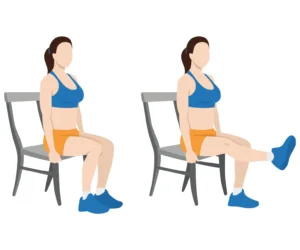
A gentle exercise for the knees, especially suitable for seniors with leg weakness or stiffness.
How to perform
-
- Sit upright on a chair
- Extend one leg straight out and hold for 2 seconds
- Lower it slowly and switch legs
- Perform 8 repetitions per leg
Benefits
- Strengthens thigh muscles
- Supports knee joint stability
- Reduces leg fatigue and heaviness
Stop if: Hip pain.
5. Standing Heel Raises
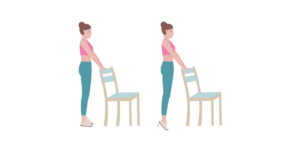
This exercise targets the calf muscles and balance, both crucial for fall prevention.
How to perform
- Stand behind a chair and hold it lightly
- Rise up onto your toes and hold for 1–2 seconds
- Slowly lower your heels back down
- Repeat 10 times
Benefits
- Improves balance
- Strengthens ankles and calves
- Reduces the risk of slipping or falling
Stop if: You feel unstable.
6. Arm Circles & Shoulder Rolls
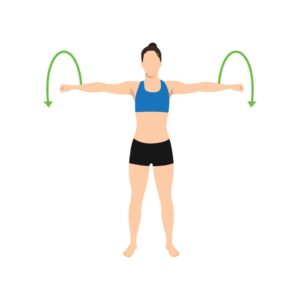
Helps relieve shoulder and neck stiffness, a common issue among seniors.
How to perform
- Extend your arms to the sides
- Make small, slow circles with your arms
- Then roll your shoulders forward and backward
- Continue for 30–45 seconds
Benefits
- Improves shoulder mobility
- Reduces neck and shoulder tension
- Supports better posture
Stop if: Shoulder pinching.
7. Side Leg Raises
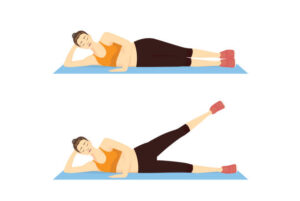
An important exercise for hip strength and stability during walking.
How to perform
- Stand next to a chair and hold it for support
- Lift one leg out to the side without leaning your body
- Lower it slowly
- Perform 8 repetitions per side
Benefits
- Strengthens hip muscles
- Improves walking stability
- Helps prevent falls
Stop if: Hip discomfort increases.
8. Cool-Down Stretch & Deep Breathing
Helps the body cool down and reduces muscle soreness after exercise.
How to perform
-
- Gently stretch calves, thighs, and arms
- Inhale through your nose, exhale slowly through your mouth
- Continue for 1–2 minutes
Benefits
- Reduces muscle tension and soreness
- Promotes relaxation
- Helps heart rate return to normal
Tip: Hold 10–20 seconds—no forcing.
How to Keep This Habit (Real-World Wisdom)
Consistency protects your independence better than intensity. But let’s be honest: willpower fades. Systems do not.
My father, a stubborn man who lived independently in his own home until he was 89, used to tell me: “I don’t exercise to look like a movie star. I exercise so I never have to ask anyone to carry my groceries.” That was his motivation. He treated his morning routine not as a chore, but as the price of his freedom.
Here is the “smart schedule” based on his philosophy to help you stick with this home workout for seniors without burnout:
- The “Carpenter’s Rule” (Weeks 1–2): Start Slow My dad viewed his body like a machine: you don’t redline a cold engine.
- The Plan: Commit to just 10 minutes, 3 days a week.
- The Modification: If you feel stiff, cut the repetitions in half. The goal is simply to show up and “grease the gears,” not to break records.
- The “Progression” Phase (Weeks 3–4) Once your engine is running smoothly, increase to 10–12 minutes, 4 days a week, or add 1–2 repetitions to each exercise. This slow increase builds real-world strength without overwhelming your joints.
- The “48-Hour Rule” (Your Safety Valve) How do you know if you did too much? Use this rule of thumb: If muscle soreness lasts longer than 48 hours, do less in your next session. You are in the driver’s seat—adjust the intensity to fit your body’s needs.
- Pro Tip: The “Coffee Table” Trick Here is a habit hack from my mother: She leaves her walking shoes right next to her coffee maker every night. She made a deal with herself: “No coffee until the shoes are on.”
- Why it works: It removes the decision. Place
Common Pitfalls (and How to Fix Them Fast)
If exercise leaves you sore for days, this is likely why.
- Too much too soon: Cut reps in half for week one
- Skipping warm-up: Add 3 minutes of marching/arm swings
- Holding breath: Count reps out loud to pace breathing
Pro Tips to Stay Consistent
One habit makes seniors far more likely to stick with home fitness.
- Exercise at the same time each day
- Keep chair and shoes visible as reminders
- Track sessions simply (a calendar checkmark works)
Optional Support: Apps & Habits That Help (Use Safely)
One small habit outside workouts can speed recovery and consistency.
- Recovery & sleep: Better rest supports muscle repair—see Top sleep trackers to improve health and recovery
- Nutrition basics: Balanced meals support joints and energy—try Balanced diet for diabetics: a simple guide
- Beginner guidance: Gentle cues and reminders—Best workout app for beginners
- No-cost options: Prefer free tools? Best free fitness apps to try now
Privacy tip: Review permissions, disable unnecessary data sharing, and choose apps with clear privacy policies.
Health & Privacy Disclaimer
This article is educational only and not a substitute for professional medical advice. Stop exercising and seek medical care if you experience chest pain, dizziness, fainting, or sharp/worsening pain. When using apps, review permissions and data sharing carefully.
FAQs — Home Workout for Seniors
Can seniors really get results at home?
Yes—consistent, safe home fitness for seniors improves strength, balance, and mobility.
How many days per week should I exercise?
Most do well with 3–5 days/week and rest as needed.
What if I have arthritis or joint pain?
Use chair-based options and smaller ranges. Mild discomfort is okay; sharp pain is not.
Is soreness normal?
Light soreness can happen early. Severe or lingering soreness means reduced volume.
When should I stop and call a doctor?
Chest pain, dizziness, fainting, or sudden shortness of breath—stop immediately.
Are fitness apps safe for seniors?
They can help if simple and well-designed—always review privacy settings.

User Reviews