



Sweethearts Love in This Economy: How to Do Valentine’s Day Without Going Broke
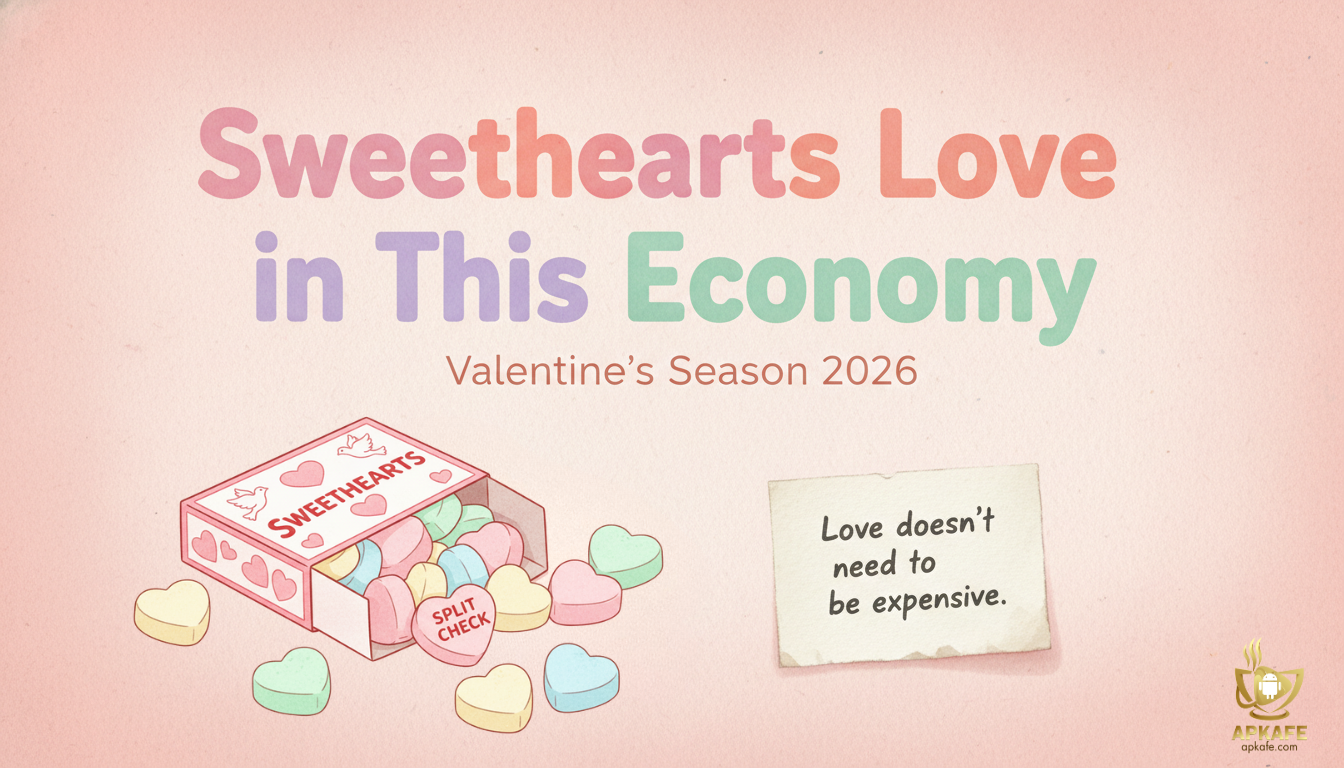
Romance didn't die in 2026; it just got a reality check. As inflation turns traditional dating into a financial stress test, Spangler Candy’s latest campaign, Sweethearts Love in this Economy, has become the new manifesto for couples who value transparency over expensive receipts. Whether you are exchanging a "Split Check" candy or planning a "Buy House" future, this survival guide shows you how to build a deep, resilient connection without going broke. Stop performing for an audience and start investing in a relationship that is actually inflation-proof.
Romance didn’t die in 2026. It stopped pretending.
As inflation, housing insecurity, and long-term financial anxiety became permanent fixtures of daily life, the way people date—and the way couples measure love—quietly changed. Big gestures lost their symbolic power. Expensive dinners stopped feeling impressive. “Perfect” Valentine’s plans started to look like a budgeting mistake.
That’s why Spangler Candy Company’s Sweethearts Love in This Economy felt less like a seasonal gimmick and more like a cultural timestamp. Candy hearts stamped with phrases like “Split Check,” “Good Credit,” and “Buy House” didn’t mock romance. They reflected modern reality: love is still the goal, but sustainability is the new standard.
This guide isn’t about candy. It’s about the new romance script in a cost-of-living era: how people flirt, commit, build trust, and stay emotionally connected without turning dating into a financial sinkhole.

POV: It’s 2026 and ‘Split Check’ is the new ‘I Love You’. 💸 Ready to see why being broke is no longer a dating dealbreaker? Keep scrolling…⬇️
Why “Love in This Economy” Became the 2026 Dating Mantra
The old romance script assumed abundance
For decades, mainstream romance ran on an unspoken equation: effort = money, and money proved love. The “right” date meant a restaurant, a gift, a ride-share, photos, and a vibe that signaled you were desirable enough to spend on. Social platforms reinforced the story; dating apps optimized for it; holidays monetized it. The problem is that this script was written for an era where the cost of daily life didn’t feel like a constant emergency.
In 2026, that script collapses for many singles—not because they don’t want romance, but because the financial runway is shorter. People are still hopeful, but more selective about where they spend: not just dollars, but attention, time, and emotional energy.
Dating inflation turned courtship into a stress test
When the price of everything rises, dating becomes a quiet stress test. A week of “normal” dating can resemble a subscription service: meals out, drinks, transportation, tickets, and “keeping up.” Then add the emotional layer—feeling judged if you suggest something cheaper, or feeling pressured to impress.
This is where Love in This Economy hits: it gives people permission to name the truth. The new romance isn’t anti-love. It’s anti-performance.
Sweethearts candies became a cultural mirror
The genius of the Sweethearts “economy” edition is that it captures the humor people use to survive. It’s not cynical to say “Buy a house.” It’s deeply human. In a housing crisis, a down payment becomes more romantic than a dozen roses because it represents shared direction.
And because these messages are small, playful, and low-stakes, they open conversations that feel terrifying in real life—like debt, spending habits, and future plans.
The End of Performative Romance
Performative romance is love for an audience
Performative romance is not romance—it’s romance staged for spectators. It’s the date planned for photos, the gift chosen for likes, the “effort” that looks generous but quietly harms the spender. In 2026, people are increasingly aware of how this pattern destroys intimacy. You can’t build closeness while you’re auditioning.
Holiday debt stress is the new relationship killer
One of the most predictable modern stories is: big Valentine’s plans, big spending, then the bill arrives—followed by anxiety, resentment, and emotional distance. People don’t break up because of dinner. They break up because of what the dinner symbolized: pressure, imbalance, and avoidance.
The Sweethearts concept challenges this cycle by flipping the signal. Instead of “prove love by spending,” it says “prove love by being real.”
“Low-cost” can still be high-intimacy
Low-cost romance isn’t automatically meaningful—but intentionally designed low-cost romance often is. A walk date becomes intimate when it’s chosen for conversation. Cooking together becomes romantic when it becomes a ritual. The point is not to spend less; it’s to spend smarter—emotionally and financially.
Financial Intimacy Is the New Love Language
What financial intimacy actually means (and what it doesn’t)
Financial intimacy doesn’t mean merging accounts on date two. It means:
- Naming comfort levels without shame
- Discussing expectations early enough to prevent resentment
- Understanding each other’s money triggers (scarcity, status, guilt)
In 2026, money silence is often more dangerous than money conflict. Silence creates assumptions; assumptions create disappointment.
“Split Check” as a signal of respect
In older dating norms, splitting the bill was sometimes framed as a lack of care. In 2026, it increasingly signals mutual respect and equality. It says: “I don’t want you to feel indebted to me,” and “I’m not using money as leverage.”
This shift is especially common in LGBTQ+ dating spaces, where gendered scripts are never fully applied. Many people now prefer a practical conversation early rather than an awkward power imbalance later.
If you’re navigating this kind of clarity in queer dating, the challenge is often learning how to stay open and human rather than transactional—especially in early messages, when first impressions form quickly. Understanding how to talk to gay guys on dating apps can help you express boundaries and intentions clearly while still keeping the interaction warm and natural.
“Good Credit” is less about money and more about safety
A heart that says “Good Credit” doesn’t mean “I’m rich.” It often reads as:
- I’m responsible
- I plan ahead
- I don’t create chaos and call it passion
For many daters in 2026, that kind of reliability is profoundly attractive. It reduces uncertainty—an essential ingredient for emotional calm.
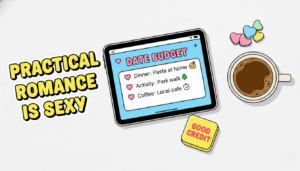
Transparency is the new foreplay. 🔥 Ready to see why ‘Good Credit’ is the ultimate 2026 thirst trap? Keep scrolling…⬇️
Dating Apps in an Economy That Punishes Waste
Apps reward novelty, not stability
Most dating platforms are built to keep people swiping, not necessarily partnering. Novelty is engaging. Consistency is quiet. That means users can feel like they’re dating inside a slot machine: occasional hits, lots of scrolling, and rising fatigue.
The new flex is intention, not “options”
The old status signal was “I have options.” The new status signal is “I have standards and clarity.” Many people in 2026 want fewer, better matches—not more conversations that go nowhere.
That’s one reason people are getting more selective about which apps they use. For gay men in the U.S., the app ecosystem is broad, but not all platforms support the same intent—so having a curated overview of the top dating apps for gay men in the U.S. can help you choose based on vibe, goals, and safety while cutting down on wasted time and burnout.

Manifesting ‘Buy House’ vibes with your partner? 🏠 Your 72-hour survival roadmap is just one swipe away…⬇️
Safety includes financial and emotional boundaries
Dating safety isn’t only physical. It also includes:
- Not being pushed into expensive plans
- Avoiding people who use money to control outcomes
- Recognizing manipulative “provider tests” early
This is why many first-time app users benefit from a structured checklist that covers practical precautions and boundary-setting. A dating safety checklist for first-time dating app users can help you date with confidence while keeping your life stable.
Practical Romance vs. Cheap Romance
Cheap romance minimizes care; practical romance maximizes meaning
Cheap romance says: “I don’t want to invest.”
Practical romance says: “I want to invest wisely.”
That difference shows up in behavior. Practical romance is consistent. It’s thoughtful. It’s aligned with real life. It doesn’t require a crisis to become “serious.”
The new romantic gestures are repeatable
In 2026, the most powerful gestures are repeatable because they build trust over time:
- A weekly home-cooked “date night”
- A morning walk ritual
- A shared budget for fun
- A small surprise that costs little but shows attention
Budget-friendly dates can still feel premium
“Budget-friendly” doesn’t have to mean boring. The goal is to create a premium emotional experience:
- Pick a theme (comfort food night, sunset walk, thrift-store challenge)
- Add structure (a playlist, a game, a shared question list)
- Make it deliberate (candles, no phones, a start and end time)
If you want date ideas you can repeat without stressing your finances, this guide to planning budget-friendly date ideas using dating apps keeps the Love in This Economy approach realistic, warm, and sustainable.
The “Buy House” Era of Commitment
Why housing became more romantic than weddings
For many couples, marriage is symbolic; housing is structural. A “Buy House” heart resonates because it suggests shared strategy in a world where stability is hard to access. It’s not about replacing romance with finance—it’s about recognizing that building a life is romantic.
Commitment in 2026 looks like alignment
Commitment is less about declarations and more about alignment:
- Shared goals
- Shared routines
- Shared boundaries
- Shared problem-solving
That’s why conversations that once happened after months now happen earlier—because people want to avoid emotional investment in misalignment.
The real flex is future-building without anxiety
A healthy modern couple isn’t defined by luxury. It’s defined by their ability to face real life without turning against each other. In other words: resilience is romance.
The Sweethearts Framework for Modern Couples
Pillar 1 — Transparency as a language of love
Start by naming reality: your comfort level, your schedule, your goals. Transparency isn’t a buzzword; it’s a nervous-system regulator. When both people are honest, the relationship stops feeling like a guessing game.
Pillar 2 — Micro-gestures over macro-debt
Micro-gestures build a warm climate. They create the sense that love is always happening—not just during special occasions. A low-cost box of candy can generate laughter and conversation. A spontaneous note can create more intimacy than a stressed-out luxury plan.
Pillar 3 — Shared goal mapping
Pick one shared goal—not necessarily “Buy House,” but something you can both name. Even small goals matter: saving for a trip, paying down debt, improving health, upgrading routines. Shared goals convert attraction into partnership.
The 15-Minute “Candy Date” Ritual (That Actually Works)
Why humor unlocks difficult conversations
Humor lowers defenses. Money talk often triggers shame. Shame triggers avoidance. A playful medium like candy hearts makes it easier to speak without feeling accused.
How to run the ritual
- Buy the Sweethearts “economy” edition.
- Phones away, sit down together.
- Read each heart out loud.
- Pause on anything that creates discomfort or laughter.
- Ask: “What does this mean to you?” rather than “Do you agree?”
What to do when you disagree
Disagreement is normal. The goal isn’t perfect alignment in one night. The goal is creating a safe space for truth. If one person loves splitting checks and the other associates it with rejection, the conversation becomes a translation—not a fight.
Money Shame and Dating Anxiety in 2026
What money shame looks like in modern dating
Money shame rarely announces itself. It hides behind:
- “I’m too busy”
- “I’m not ready”
- “I don’t like going out”
- “I’m tired of dating apps”
Sometimes people aren’t tired of dating—they’re tired of the pressure to perform wealth. When dating feels like a financial audition, the nervous system retreats.
Practical romance reduces anxiety through shared realism
There’s a reason couples feel calmer when they stop pretending: shared realism reduces uncertainty. When you know what’s true, you stop filling the gaps with fear. You stop overthinking. You stop reading silence as rejection.
The new dating confidence is stability, not swagger
In 2026, confidence looks like:
- Clear boundaries
- Calm communication
- Consistent effort
- Respect for time and money
That’s the opposite of flashy. And it’s far more sustainable.
The 72-Hour Practical Romance Reset
| Timeline | Action | Description & Goal |
|---|---|---|
| First 24 hours | Admit reality without shame | Say it out loud: “Dating is expensive,” or “I want to date without financial stress.” Naming reality isn’t unromantic—it’s mature. |
| Next 48 hours | Plan one low-cost, high-presence date | Pick one plan that prioritizes conversation and comfort. Give it structure. Make it intentional. Keep it simple. |
| Within 72 hours | Set one shared goal | A shared goal can be tiny. The point is building a “we” muscle. Long-term love isn’t one moment—it’s repeated alignment. |
What Sweethearts Love in This Economy Really Represents
It’s not anti-romance—it’s anti-illusion
This movement rejects the idea that love must be expensive to be real. It challenges the belief that struggle is proof of passion. It replaces spectacle with sustainability.
Standards didn’t drop—they evolved
The old question was: “Can you impress me?”
The new question is: “Can we build something without turning against each other?”
That question is quieter than “Be Mine,” but it lasts longer than a bouquet of flowers.
In 2026, the most romantic thing is a survivable relationship
A survivable relationship is one where:
- No one is financially pressured to perform
- Money is discussed without humiliation
- The couple plays on the same team
That’s not boring. That’s rare. And in a high-stress world, rarity is attractive.
If you want to keep building your dating strategy with practical guidance, explore these next:
- How to Find a Boyfriend: A Gay Man’s Guide to Love and Connection
- How to Fix Messaging Anxiety on Dating Apps
- 5 Dating Traps You Must Avoid in the U.S. (Before They Cost You Time & Energy)S

User Reviews