



Yoga for Anxiety and Stress: A Beginner-Friendly Step-by-Step Guide
Anxiety and stress often show up as a tight body and a restless mind, which is why yoga for anxiety and stress has become one of the most trusted ways to create steady, science-backed relief. Research from organizations like NIH and WHO shows that mindful movement and slow, intentional breathing can help regulate the nervous system and soften the body’s stress response. If you’re new to yoga, it’s completely normal to feel unsure about where to begin or whether you're practicing safely. That’s exactly what this guide is here to clarify. By the end, you’ll have a simple, repeatable yoga routine designed specifically for anxiety and stress—complete with warm-ups, step-by-step poses, breathing techniques, common pitfalls, privacy tips for using yoga apps, and clear “stop-if” safety cues. Whether you prefer practicing at home or using an app like Yoga-Go, Grokker, or Down Dog, this routine helps you build calm without overwhelm.
Why Yoga Helps Reduce Anxiety and Stress
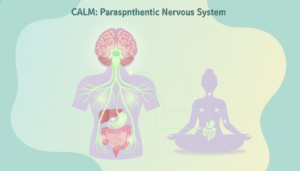
Yoga supports mental wellness through several mechanisms recognized by public health organizations (NIH/WHO). First, slow breathing and mindful movement help activate the parasympathetic nervous system, which naturally lowers the body’s stress response. This is why many people feel calmer within minutes of starting gentle yoga.
Second, yoga reduces muscular tension—a common physical symptom of anxiety. Poses like Cat–Cow and Forward Fold mobilize the spine, which can alleviate tightness in the shoulders and lower back.
Third, focusing on breath and sensation can interrupt worry spirals. Instead of fighting anxious thoughts, yoga redirects attention to present-moment cues like movement and grounding.
Finally, regular practice builds resilience. Even short routines help train your body to recover faster from stress triggers over time.
If you’re interested in app-based routines designed for all levels, see our Best Yoga Apps for 2024 — these tools are especially useful for beginners who want guided calm without complexity.
Step-by-Step Calming Yoga Routine (5–8 Steps)
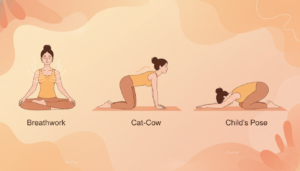
Follow these structured steps to create a grounding flow that supports your mind and body.
Diaphragmatic Breathing & Centering
Begin seated or lying down. Place one hand on your belly and inhale slowly through your nose, letting the belly rise. Exhale through pursed lips. Repeat for 5–8 breaths. This technique can activate the body’s calming parasympathetic response (NIH).
If thoughts race, don’t try to “stop” them. Instead, attach your attention to the physical sensation of breath. If light-headed, return to natural breathing.
Cat–Cow for Tension Release
Move onto hands and knees. Inhale as you arch your spine (Cow), exhale as you round (Cat). Flow slowly for 6–10 cycles. This mobilizes the spine and relieves upper-body tension that often builds with stress.
If your wrists feel strained, place a folded towel under them or shift to your forearms. Keep movement soft rather than forceful.
Child’s Pose for Nervous-System Downshift
Kneel and sit back onto your heels, reaching arms forward. Rest your forehead on the mat or a pillow. Stay for 5–10 breaths. This position helps reduce sensory input and steady the breath.
If knees are sensitive, widen them or place cushions. If the forehead doesn’t reach the floor, stack pillows—support promotes relaxation.
Forward Fold for Mind Quieting
Stand with feet hip-width apart and hinge forward. Bend your knees as much as you need. Let your head hang heavy. Gentle forward folds can help quiet the mind by reducing stimulation and lengthening the back body.
Avoid locking knees. If dizziness occurs, slowly roll up, pausing halfway.
Legs-Up-the-Wall for Deep Calm
Sit sideways against a wall, then swing legs upward as your back reclines. Rest arms by your sides. Stay 2–5 minutes. This passive inversion helps with circulation and stress relief for many people.
If hamstrings feel tight, scoot farther from the wall. If your lower back feels strained, place a pillow under your hips.
Short Guided Relaxation (With/Without App)
End with 1–3 minutes of guided relaxation. Apps like Grokker or Yoga-Go offer short, calming audio clips. If you prefer silence, focus on slow breaths and the sensation of your body resting.
Turn on Do Not Disturb to avoid notifications, which may spike anxiety mid-practice.
For more beginner-friendly stress-management steps, you can also explore our Friendly Guide for Reducing Stress & Anxiety — a great companion resource to this yoga routine.
10-Minute Yoga Routine for Anxiety & Stress
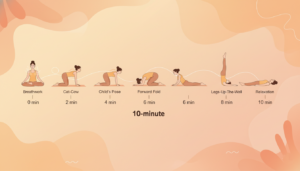
When you’re overwhelmed, this short, structured routine delivers calm without requiring extra energy.
This quick routine fits mornings, lunch breaks, or pre-bed wind-downs. Move slowly and use props as needed.
Minute-by-minute guide
- Minute 0–1: Centering Breath
Sit comfortably and take slow nasal breaths. Inhale 4 seconds, exhale 6 seconds. - Minute 1–3: Cat–Cow
Flow gently between arching and rounding the spine. Match each move with breath. - Minute 3–5: Child’s Pose
Widen knees if it helps. Place a pillow under the chest for comfort. - Minute 5–7: Standing Forward Fold
Bend knees deeply. Let head and arms hang heavy. - Minute 7–9: Legs-Up-the-Wall
Stay here with natural breathing. Add a folded blanket under your hips if you want more support. - Minute 9–10: Guided Relaxation
Use a short clip from Yoga-Go or Grokker, or rest quietly with your hand on your belly.
This compact routine is ideal for days when energy is low but anxiety is high.
Pitfalls & Pro Tips for Yoga When Anxious
Avoid common mistakes that interrupt progress—and learn pro tips that make your routine feel safer and easier.
Common Pitfalls to Avoid
- Trying advanced poses too soon
- Holding the breath during transitions
- Ignoring discomfort due to anxiety pressure
- Pushing through dizziness or chest tightness
- Overusing apps without adjusting privacy settings
Pro Tips for Building a Consistent Routine
- Practice at the same time daily for habit-building
- Start with 5 minutes—consistency beats intensity
- Pair your routine with a calming environment cue (soft lighting, warm tea)
- Use simple in-app reminders without enabling unnecessary permissions
Contraindications & “Stop If…” Guidance
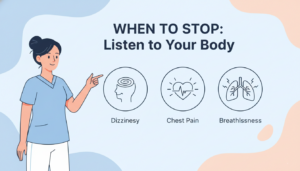
Your safety matters more than completing any pose—these red flags help you listen to your body.
When You Should Modify Poses
- Knee, wrist, or back discomfort
- Difficulty balancing
- Breathlessness or tension increasing
- Recent injury or surgery
When You Should Stop and Consult a Professional
- Sharp pain, chest pain, or sudden dizziness
- Unusual shortness of breath
- Persistent anxiety spikes during or after practice
- History of heart/lung conditions (consult doctor before beginning)
FAQs
How often should I do yoga for anxiety?
For many people, 5–10 minutes daily or every other day feels manageable. Short, frequent sessions can reinforce calmer breathing and create a steady rhythm. Adjust intensity depending on how your body feels.
Can yoga replace therapy or medication?
No. Yoga can complement professional treatment but does not replace medical care. If you notice persistent anxiety, consult a qualified healthcare provider (CDC/NIH).
Which yoga poses help most with stress?
Common beginner-friendly poses include Child’s Pose, Cat–Cow, Forward Fold, and Legs-Up-the-Wall. These gently mobilize the spine and reduce stimulation. Choose poses that feel physically comfortable.
Should I use a yoga app or practice offline?
Both work. Apps can guide beginners with structure, but offline practice offers quiet and privacy. Use whichever feels least overwhelming, and manage app permissions before starting.
Can I practice yoga if I have chronic pain?
Yes, but modify poses and avoid deep stretches. If pain worsens, stop and consult a professional. Use props like pillows and blankets for support.
What if yoga increases my anxiety at first?
This can happen when slowing down feels unfamiliar. Shorten the session, stay with gentle poses, or focus only on breathing. If anxiety spikes consistently, seek guidance from a clinician.

User Reviews