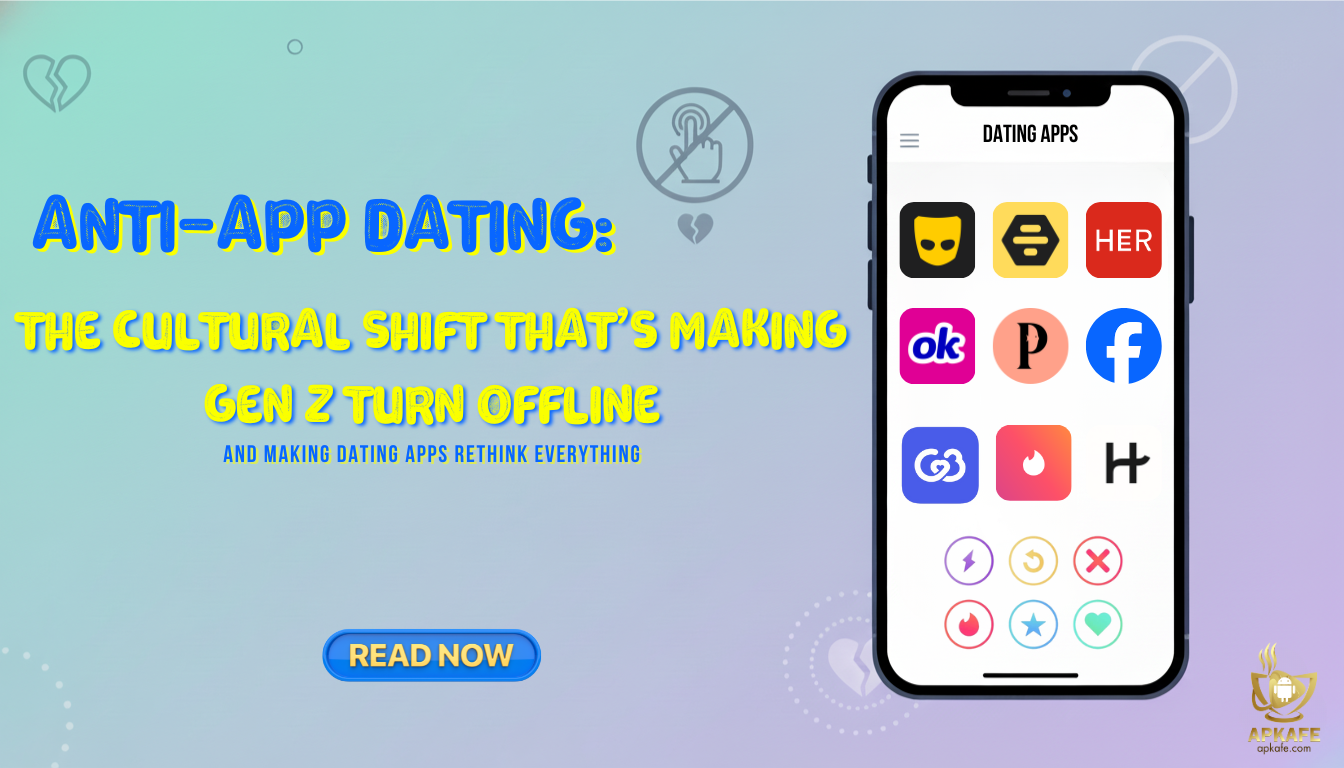


Gen Z’s Latest Dating Trend: How to Connect in the Anti-App Era
😩 Tired of endless swiping, half-hearted matches, and the growing sense that dating apps just… don’t work anymore?✨ There’s a new trend reshaping how Gen Z dates—one that finally brings clarity, calm, and real connection back into the picture.💛 And once you understand how this Anti-App Era actually works, dating stops feeling like burnout and starts feeling possible again.
🔥 If you’ve been feeling exhausted by endless swiping, low-effort conversations, and dates that go nowhere, you’re not alone. Many people today say dating apps feel more draining than exciting.
✨ But here’s the part nobody tells you: dating actually becomes easier and more meaningful once you shift into the “anti-dating-app era mindset”—a hybrid style where authentic offline connection returns to the center.
💛 Follow the framework below and dating starts to feel human again. Less pressure. More depth. More momentum. And more real people showing up the way you hoped they would.
👉 So why is this happening—and how do you use this shift to your advantage?
Why This Became the Anti-Dating-App Era
🔍 Swiping used to feel exciting — now it feels like emotional work with very little reward.
💡 Understanding the landscape helps you adjust your strategy so dating finally feels aligned with how people actually want to connect.
Swipe burnout & emotional exhaustion
Swiping is supposed to feel fun, but research and user experience show the opposite is often true. Swipe-based platforms rely on rapid dopamine spikes, followed by equally fast dips—leading to emotional fatigue.
People describe feeling:
- “numb from matching,”
- “tired of starting the same conversations,”
- and “disappointed when nothing moves forward.”
🔥 When matching turns into an emotional rollercoaster, burnout is inevitable.
Bumble backlash & declining trust
Bumble’s brand once stood for empowerment and safety, but recent controversies, feature changes, and dissatisfaction with match quality triggered widespread backlash.
Users complain about:
- Low response rates
- Unclear filtering
- Feeling pressured by new monetization features
This contributed heavily to Gen Z’s movement away from traditional swipe apps—and toward human-first dating.
Dating fatigue: too many options, not enough connection
Psychologists call it the paradox of choice: when options increase, satisfaction decreases.
On apps, that looks like:
- Too many profiles to evaluate
- People feeling replaceable
- Matches that lack intention
- Nanosecond decisions about people you haven’t even spoken to
The result?
💬 “I match 20 people, but none actually want to meet.”
LGBTQ+ concerns: safety, discrimination & algorithm bias
Members of the LGBTQ+ community often report:
- Safety concerns on Grindr
- Unwanted explicit messages
- Algorithm bias on mainstream platforms
- Difficulty filtering by identity and lifestyle
This has pushed queer daters toward more community-driven platforms—and offline spaces where they feel represented and safe.
➡️ What shifted beneath the surface that pushed millions into an “anti-app” mindset?
Are Dating Apps Really Dying? Not Really — They’re Evolving
🌱 People are quitting apps, not love — the method changed, not the mission.
🌱 You don’t have to delete your apps; you just need to use them differently.
People are deleting apps… but not giving up on love
What people are quitting is not dating—it’s the mechanics of swipe-based dating.
They’re over endless scrolling, texting fatigue, and shallow interactions.
But meaningful connection? No one is quitting that.
The shift from swipe dating to slow dating
Slow dating emphasizes:
- Fewer matches
- More intentional conversations
- Meeting sooner (to avoid fantasy expectations)
- Prioritizing compatibility over novelty
This shift is exactly why apps with deeper prompts and voice features (like Hinge or Overtone) are growing
Rise of community-based, offline-first connection
More people today meet through:
- Fitness classes
- Book clubs
- Art workshops
- Volunteering
- Coworking communities
Human connection thrives in real environments—no algorithm needed.
Dating apps are no longer “the main stage.”
They’re becoming support tools, not the central strategy.
Honest Reviews — Which Dating Apps Still Work in the Anti-App Era?
💡 Here’s the truth: some apps declined, some adapted, and some emerged as better fits for intentional daters.
Below are experience-based, honest insights to help you choose wisely—without wasting your energy.
Bumble — Strong reputation, declining trust
Once the empowering “women first” app, Bumble now struggles with user dissatisfaction and trust issues after controversial updates and declining match quality.
Pros
✔ Women-first initiation (reduces low-effort openers)
✔ Friendly brand and aesthetic
✔ Less hookup-oriented than Tinder
Cons
❌ Backlash over feature changes
❌ Lower activity levels in many cities
❌ Conversations often expire due to the 24-hour constraint
Best for
Those who prefer structured messaging and a respectful community.
Does it still work?
Yes—but success varies heavily by region. You may need to optimize your prompts and photos carefully.
👉 For safety and best practices: How to use Bumble safely
Tinder — Best for volume, worst for depth
Tinder remains the largest dating app by user base, meaning you’ll match more people—fast. But quantity doesn’t equal quality.
Pros
✔ Massive diversity of profiles
✔ Easy to match
✔ Useful for travelers or casual connections
Cons
❌ Not ideal for serious dating
❌ Higher ghosting rates
❌ Limited prompt-depth
Best for
People seeking casual dating, exploration, or a wide pool.
👉 To improve outcomes on Tinder, strong photos matter more than anything: How to optimize a Tinder or Bumble profile.
Hinge — The best app for slow, serious dating
Hinge markets itself as “designed to be deleted”—and it actually lives up to that promise better than most.
Why Hinge stands out
✔ Thoughtful prompts
✔ Audio/voice features (more human connection)
✔ More intentional user base
✔ Better matching via “Standouts”
Best for
People seeking emotional maturity, deeper conversations, and long-term potential.
If you’re ready to date intentionally, Hinge gives you the strongest odds.
Overtone — The rising AI-powered alternative
Overtone uses voice-first matching to create emotional chemistry before photos influence perception.
Why it’s growing
✔ AI-assisted compatibility
✔ Real voices reduce misinterpretation
✔ Great for introverts who dislike heavy texting
Best for
People who want deeper, more intuitive matching with less swiping.
LGBTQ+ Apps: Grindr, HER, Taimi — Community Matters Most
Each platform has its own culture, strengths, and safety considerations.
Grindr
✔ Huge user base
✔ Fast-paced
❌ Requires strong safety awareness
HER
✔ Safe space for women-loving-women
✔ Community events
✔ Friendlier energy
Taimi
✔ Inclusive of many identities
✔ Community features
✔ Good for queer networking
👉 For a curated list of the best options for gay men: Top Dating Apps for Gay Men (U.S.)
🔗 So what new behaviors are daters adopting, and why does this evolution make dating easier for you?
How to Date Without Relying on Apps (Offline Strategy)
🌿 Real-world chemistry often forms faster—and far more authentically—than anything happening on a screen.
As dating fatigue rises, more people are rediscovering the comfort and ease of offline connection. After years of swiping, ghosting, and digital disappointment, the charm of meeting someone organically feels refreshing again. Offline dating lets you read someone’s energy instantly — you hear their tone, see their expressions, and notice how they interact with others. These real cues reveal compatibility faster than any profile bio ever could.
Offline dating also removes performance pressure. You’re not optimizing for an algorithm; you’re simply showing up as a real person, with your humor, voice, and natural presence doing the work. And because offline moments feel less curated and more spontaneous, daters often report stronger initial chemistry, higher satisfaction, and fewer mismatched expectations.
The “interest-first” method: bond through shared activities
Shared-interest settings—like art workshops, hiking clubs, cooking classes, or co-working meetups—give you instant common ground. Conversation flows naturally because you’re experiencing something together.
Meet people through friends, coworkers, and extended circles
Friend-of-friend introductions remain one of the safest and most successful dating channels. Social familiarity builds trust and reduces guesswork.
Use events and hobbies to create natural chemistry
Events such as book clubs, volunteer activities, open mics, or fitness groups offer relaxed environments where conversations unfold organically.
How to flirt offline in a safe, non-awkward way
Offline flirting is subtle. A warm smile, brief eye contact, and a simple, situational question like “Have you tried this class before?” opens the door naturally.
🚪And once offline connection feels more natural again, the next step is learning how to blend it with online dating in a healthy and sustainable way.
A Hybrid Strategy — The 70/30 Method Gen Z Prefers
⚖️ The 70/30 method creates balance—letting real-life interaction lead while apps support you in small, intentional ways.
Today’s daters don’t want to rely solely on apps, yet they don’t want to abandon them completely either. The hybrid strategy offers the best of both worlds: 70% real-life experiences, where connection actually forms, and 30% app-based introductions, used sparingly and purposefully. This reduces burnout, increases clarity, and keeps dating emotionally grounded.
When used lightly, apps stop feeling like emotional labor and begin feeling like helpful discovery tools. They introduce people into your orbit—but offline connection determines whether chemistry is real.
70% offline — build real connection through shared experiences
Face-to-face interaction reveals tone, confidence, humor, warmth, and comfort level instantly—far faster than weeks of texting.
30% online — use apps as “support tools” only
Apps should help you discover people, not dominate your emotional life. Swiping becomes occasional, not constant.
Time limits, red flags, and the 3–2–1 rule
A simple framework prevents over-texting and delusionships:
- 3 messages → move to voice note or short call
- 2 days → suggest a simple plan
- 1 week → meet or move on
If ghosting still happens, this guide helps explain why: 👉 Why he ghosted you
🔄 And once you establish a balanced rhythm, the next step is learning how to create deeper, more meaningful emotional connection within it.
How to Build Meaningful Connections in the Anti-App Era
💗 A match means nothing unless it evolves into emotional safety, pacing, and compatibility.
Modern dating is shifting away from match-collecting and toward intention. Daters today care less about “How many matches did I get?” and more about “Does this person communicate clearly? Do they match my values? Do I feel safe with them?”
Emotional safety matters more than ever. When both people feel mentally and emotionally grounded, connection becomes steady, reciprocal, and sustainable. Compatibility now shows up through lifestyle alignment, emotional bandwidth, pacing, and communication habits.
Focus on emotional safety, not just attraction
Attraction opens the door, but emotional safety keeps the connection alive.
Avoiding “delusionships”
Avoid building fantasy relationships based on texting. Meet early. Let actions—not imagination—define compatibility.
If you’re unsure someone is genuinely interested, this guide helps: 👉 Signals of interest
Build compatibility through lifestyle & values
Compatibility isn’t about identical hobbies. It’s about aligned expectations, emotional maturity, and life rhythms that can coexist long-term.
🧭 And when you build connection from this grounded place, you’ll start noticing unmistakable signs that you’re finally dating the right way.
Signs You’re Dating the Right Way
✨ When your dating approach aligns with your emotional health, everything becomes lighter, clearer, and more enjoyable.
Healthy dating doesn’t feel chaotic—it feels calm, mutual, and reciprocal. You’re no longer guessing how someone feels, because their consistency makes it obvious. Your nervous system settles. Clarity replaces confusion. Communication feels equal. These changes indicate your dating approach is finally working in your favor.
Less ghosting, more clarity
People with intention don’t disappear. They communicate.
You feel calm, not anxious
Healthy pacing regulates your nervous system.
Conversations feel reciprocal
Both people initiate, share, and invest evenly.
🔎 And once you create this emotionally healthy foundation, the next practical step is staying safe—online and offline.
Safety & Privacy Checklist (Must-Use Today)
🛡️ A good dating strategy is meaningless without safety and boundaries to protect it.
Here’s a simple 6-item checklist to stay safe:
- Meet in public places for the first 2–3 dates.
- Share your location with a trusted friend before meeting.
- Use in-app calling instead of giving your real number early on.
- Verify photos through a quick video call.
- Set boundaries early around communication, pacing, and expectations.
- Avoid sharing private info (address, workplace, daily routine).
Review the full safety guide for U.S. users here: 👉 Dating Safety Checklist
FAQ — Anti-Dating-App Era & Modern Dating
❓ The biggest dating questions today come from confusion, burnout, and shifting expectations—here are clear answers.
Q1: Are dating apps dying?
Not dying—evolving. People are demanding better emotional alignment and less swiping fatigue.
Q2: Why am I burned out from dating apps?
Because your nervous system isn’t built for endless micro-rejection, infinite choice, and inconsistent communication.
Q3: Is slow dating better?
Yes—slow dating builds emotional safety and reduces delusionships.
Q4: How long should I talk to someone before meeting?
Use the 3–2–1 rule: meet within one week.
Q5: What apps still work best?
Hinge, Bumble, Tinder for casual, and identity-based apps for LGBTQ+ daters.
Q6: How can I date safely offline?
Use public spaces, share your location, verify identity, and maintain boundaries.
✨ And all of this brings us to the real truth behind the anti-dating-app era—dating isn’t disappearing; it’s transforming.
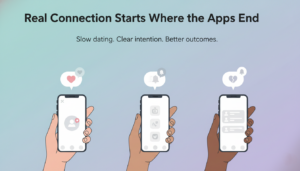
Conclusion — Dating Isn’t Dead; It’s Becoming Real Again
🎉 The future of dating isn’t more swiping—it’s more intention, clarity, and emotional maturity.
People aren’t quitting dating. They’re quitting dating that hurts. The anti-dating-app era is a reset—a shift toward deeper connection, stronger boundaries, and healthier expectations. Apps still matter, but real connection happens when you show up with presence and authenticity.
🎁Reward:
- When you stop dating from fear and fatigue—and start dating with clarity, balance, and intention—love stops feeling like a confusing maze and finally becomes what you hoped for back at the very beginning: something real, steady, and genuinely possible for you.
Keep Exploring — Your Next Dating Breakthrough Starts Here
📚 The more clarity you gain, the easier dating becomes.
If today’s guide helped you see dating from a clearer, healthier angle, your journey doesn’t have to stop here. Each article below goes deeper into the challenges modern daters face — from understanding interest signals to creating natural conversations and even staying safe online and offline.
Think of these as your next steps toward more confident, intentional dating.
Your next “aha moment” might come from one of the guides below.
Recommended Guides to Continue Your Progress
🔗 Signals of Interest — How to Know If Someone Likes You
🔗 How to Start a Conversation Naturally on a Dating App
🔗 Dating Safety Checklist for First-Time App Users (U.S.)
🔗 Top Dating Apps for Gay Men in the U.S.

User Reviews